brain power
Why the Elevator Stops Short: A Lateral Thinking Puzzle and the Assumptions Behind It
A single riddle about a man and his building's elevator shows how a hidden premise can turn a confusing routine into an obvious answer.
Charlie5 min read

True problem-solving begins when we question the obvious. Lateral thinking puzzles force this shift, pulling us out of familiar patterns and into unexpected solutions. They are not about arcane knowledge, but about spotting the hidden assumption. Ready to flex that mental muscle?
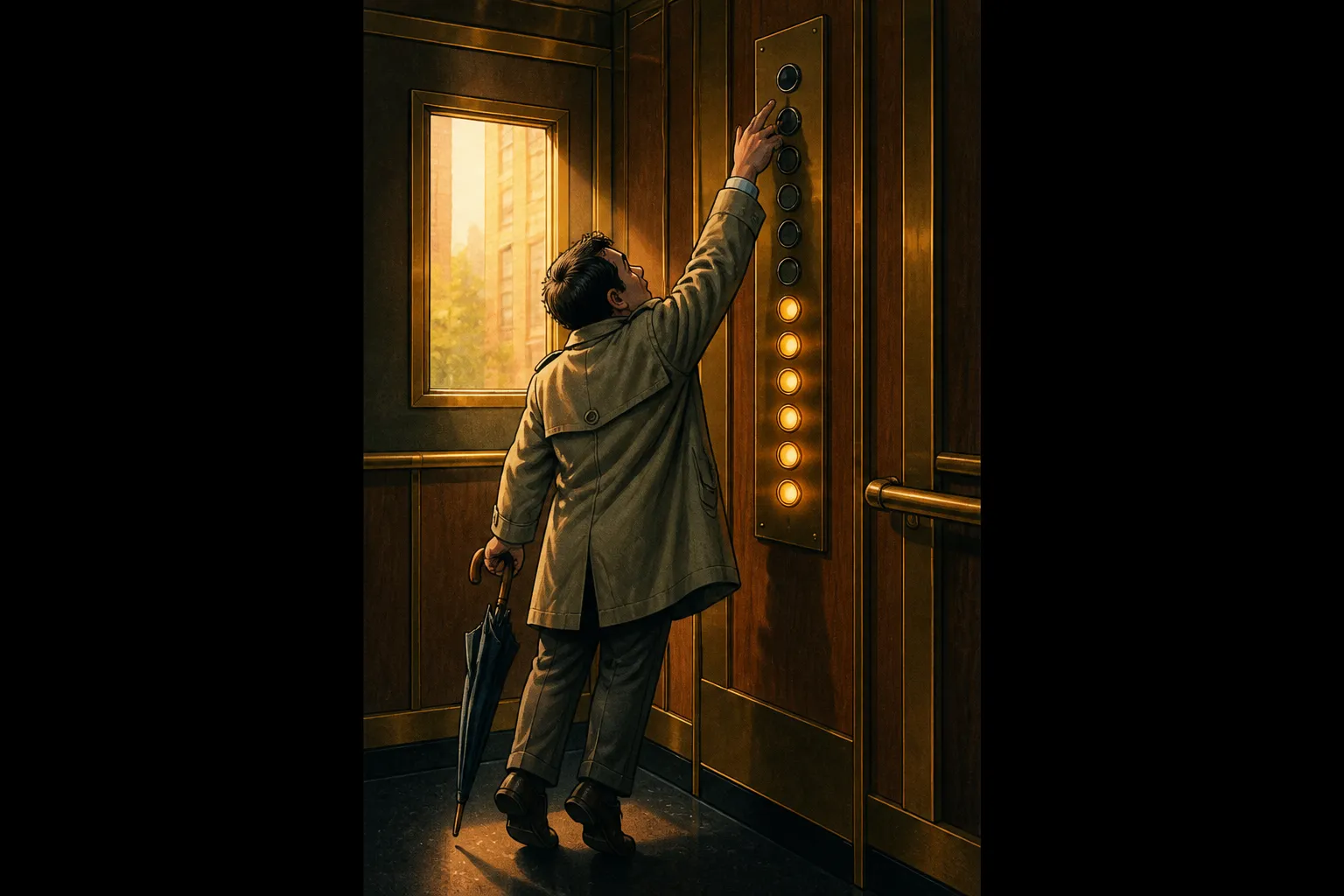
A man lives on the twelfth floor of an apartment building. Every morning, he takes the elevator down to the ground floor and leaves for work. In the evening, he returns, gets into the elevator, and if it's a rainy day, or if someone else is in the elevator, he goes all the way to his floor. If it's a sunny day and he's alone, he goes to the tenth floor and walks the rest of the way up two flights of stairs. Why does he do this?
Think You Have It?
Pause here. Before you read on, consider the details. What assumptions are you making about the man, the elevator, or even the act of pressing a button? Sometimes, the most elegant solutions are the ones we initially overlook because they challenge our mental image of the scenario.
The Core Challenge of Unseen Assumptions
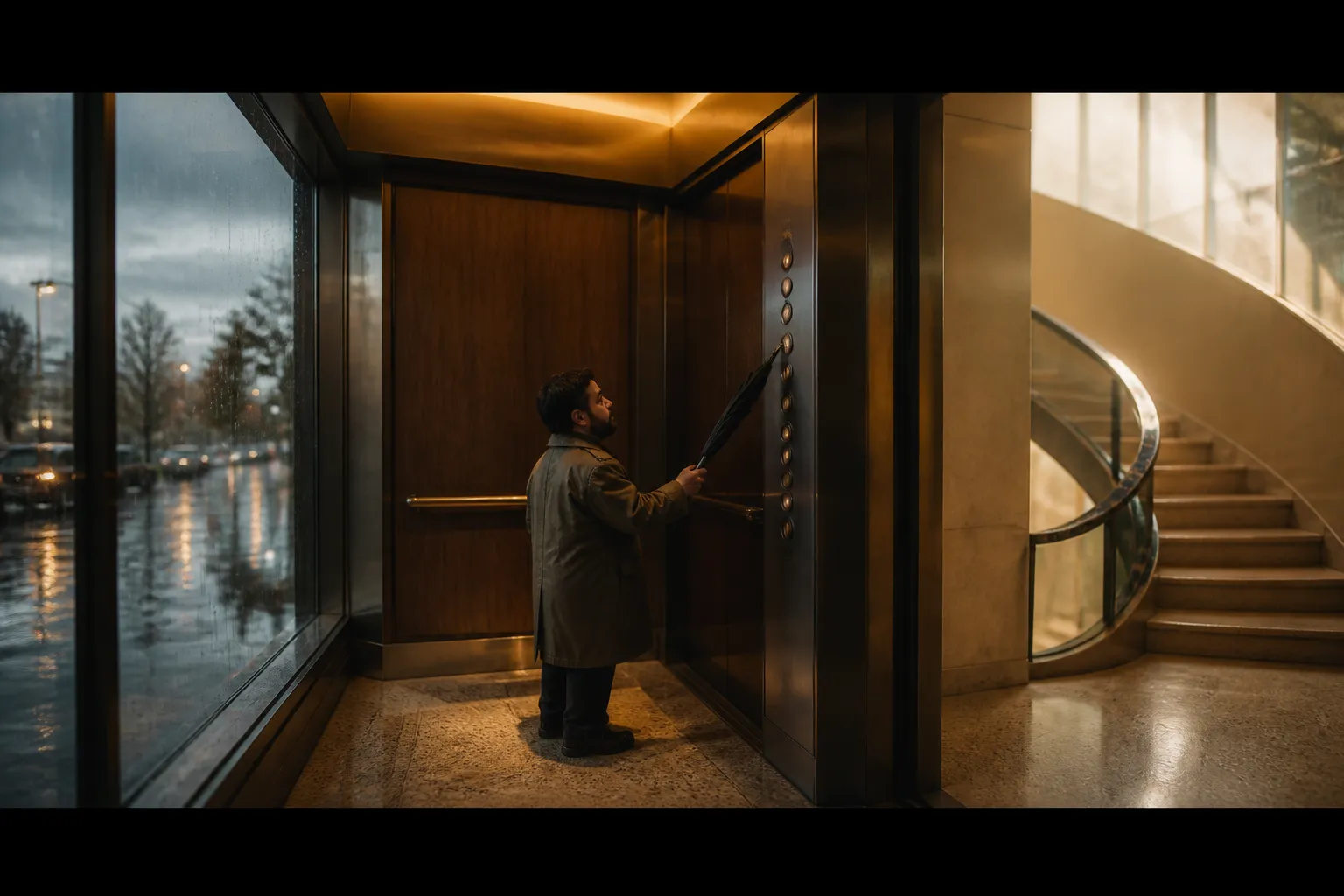
This riddle, known as 'The Man in the Elevator,' is a classic example of lateral thinking at work. It starts with a simple scenario and builds a narrative that seems contradictory, only to reveal a hidden premise that makes perfect sense. The core answer often points to the man being a dwarf. On sunny days, when he is alone, he cannot reach the button for the twelfth floor, so he presses the highest button he can reach, which is the tenth floor, and walks the remaining two flights. If it is raining, he can use his umbrella to push the button, or if someone else is present, they can push it for him [3]. This twist challenges our default mental image of an average-height individual, highlighting how deeply our assumptions shape our initial problem-solving attempts.
Lateral thinking riddles are a powerful tool for cognitive agility. They demonstrate that the simplest answer is often obscured by an unexamined detail. They work because our minds naturally build a literal story around the given facts, often missing the one piece that resides outside our typical frame of reference [1]. Recognizing this pattern is the first step in mastering creative problem-solving, moving beyond superficial details to the underlying structure of a challenge.
Variants, Clues, and Cognitive Impact
The variant detail about the umbrella on rainy days is more than just a clever add-on; it profoundly shifts the puzzle's difficulty. Without it, the riddle often becomes a pure identity reveal. With the umbrella detail, the puzzle transforms into a chain of reasoning about physical constraints, available tools, and social interaction [3]. This small clue nudges the solver towards considering external aids or situational changes that impact the man's ability to operate the elevator. It's a testament to how subtly a problem's parameters can guide, or misguide, our reasoning. Understanding these variants is crucial when selecting a teaser, as the clarity and quantity of clues dictate the solver's experience.
The value of comparing these versions lies in seeing how a single piece of information can transform a direct puzzle into a more complex, multi-layered problem. It teaches us to pay attention to every word and to question why specific details are included. This analytical approach, where we break down how information influences perception, is a hallmark of strong cognitive performance. It is not about knowing the answer, but about understanding the mechanics of how the answer is revealed.
Expanding Your Lateral Thinking Toolkit
The Man in the Elevator is just one entry in a broad category of puzzles designed to challenge fixed perspectives. Consider 'The Man in the Bar,' where a man is cured of hiccups after a bartender pulls a gun on him [1]. Here, the unexpected action (gun) has an unexpected but logical consequence (fright cures hiccups). Similarly, 'Death in a Field' requires us to move beyond a two-dimensional view, as the clue of an unopened parachute package points to a jump from a plane [3]. The solver must recognize the implication of a third dimension, a vertical fall, to connect the dots. These riddles all share a common thread: they punish the assumption that the scene is static or entirely contained within the initial description.
Another classic, 'The Man Who Hanged Himself,' relies on understanding a change of state. The man stood on a block of ice which has since melted, leaving no platform [3]. Our initial thought might be to look for a stool or chair, overlooking the possibility that the scene itself has evolved over time. These puzzles reinforce the importance of dynamic thinking, where we consider how elements within a scenario might transform. Beyond these narrative puzzles, logic challenges like the 'socks problem,' where four socks guarantee a matching pair from three colors, or the 'three switches puzzle,' which uses temperature to deduce the correct light switch, offer a different but equally rewarding form of constraint-based reasoning [1]. They push us to think systematically about all possible states and their observable effects.
Selecting and Designing Effective Teasers
Choosing a good riddle involves asking critical questions about its structure and impact. Is the puzzle too literal, or does it genuinely require a shift in perspective? Many failed attempts stem from a solver's inability to consider possibilities outside a single, unexamined assumption [3]. It's also worth examining why the mind often searches for overly complex solutions when a simpler one exists. 'The Trouble with Sons,' for example, often leads to intricate family trees when the answer is simply triplets or quadruplets [3]. The most effective teasers provide a satisfying, easy-to-state explanation once the correct insight is found [3]. This clarity makes the puzzle memorable and reinforces the power of simple, elegant solutions.
When curating puzzles, consider the audience and context. Riddles like 'The Deadly Dish,' which involves cannibalism, or those that refer to sensitive topics, require careful review before presentation [3]. Even a seemingly innocuous puzzle like 'The Man in the Elevator' might need consideration regarding its wording if the answer pertains to a dwarf, ensuring respectful and appropriate language for all audiences [3]. Ultimately, the goal is to spark curiosity and challenge thinking, not to cause discomfort. Focus on puzzles that deliver a genuine 'aha!' moment, encouraging a broader, more flexible approach to problem-solving. This intellectual generosity is what transforms a simple riddle into a powerful cognitive exercise.