puzzles
The Memory Palace Starter Kit: Store and Recall 10 Random Words
Build a ten-stop mental route, try a ten-word challenge, and check your own recall, with a plain look at what the research does and does not show.
Charlie4 min read

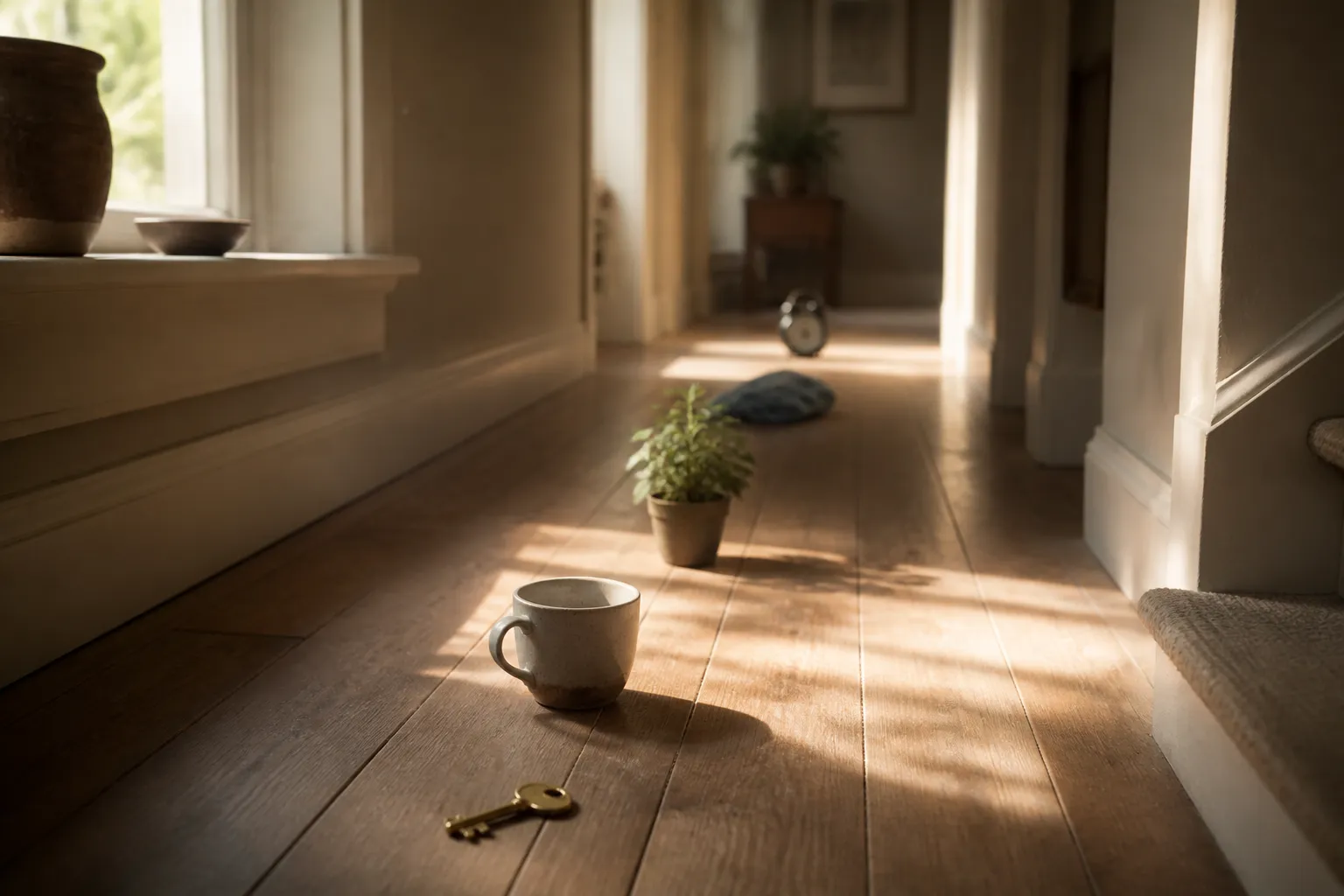
Picture your front door. Now picture a giant glowing toaster standing in front of it, humming, warm, smelling of burnt bread. You just stored a word. The memory palace, also called the method of loci, works like that. It ties items you want to remember to places you already know. It dates back to ancient Greece.
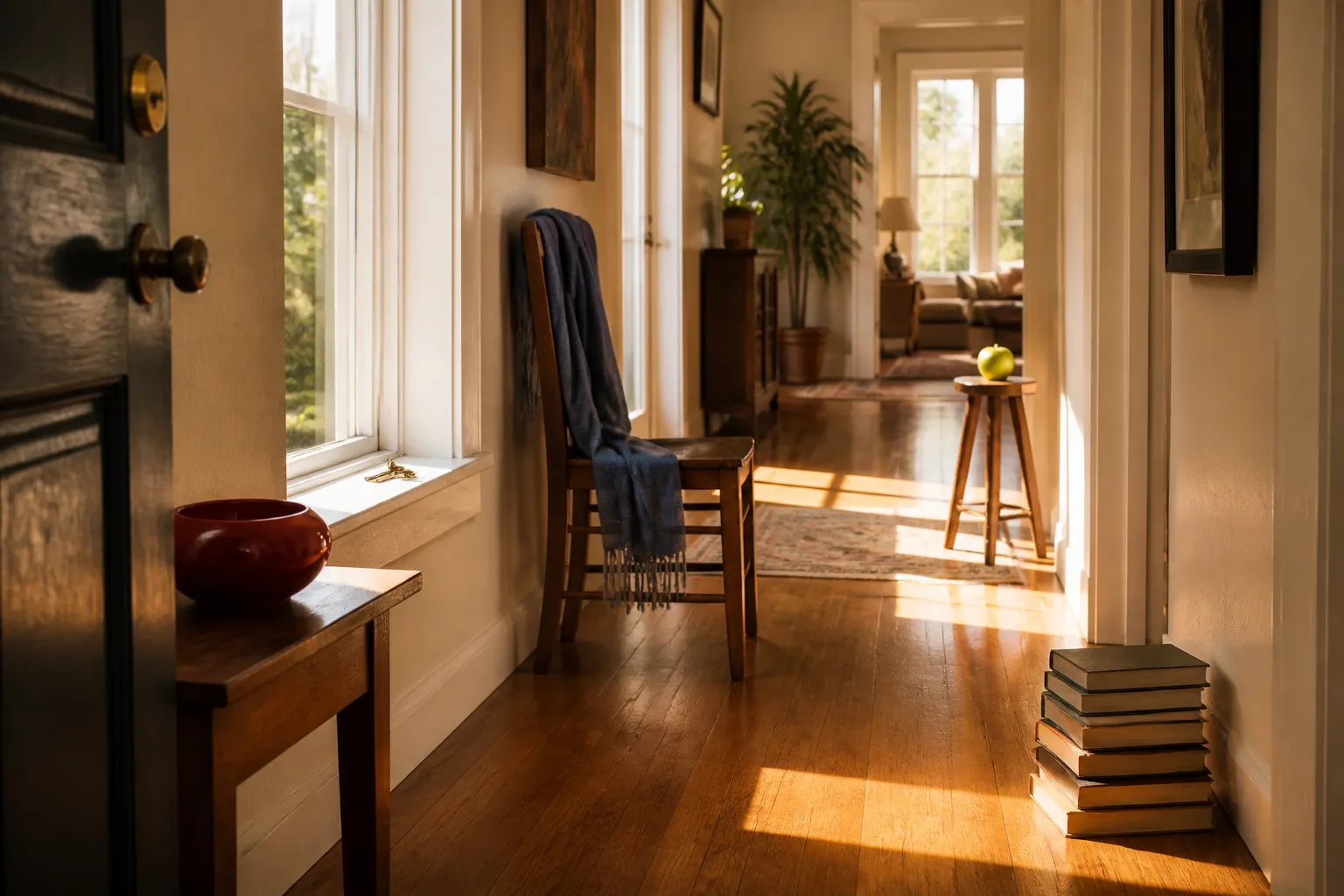
What a Memory Palace Is
The method of loci links each item to a specific spot in a place you can picture clearly. The place does not have to be real. It can be your home, your commute, or an invented building. What matters is that you can walk through it in the same order every time [4].
Recall is a walk. You move through the place in your mind and find what you left at each stop. The list stops being a pile of words. It becomes a route with an order built in.
Building Your Starter Palace
Pick a place you know well, such as your living room or a short walk you take often. Choose ten stops along one fixed path. Walk it in your head a few times until the order feels automatic. Then follow these steps:
- Name your ten stops in order, for example front door, shoe rack, lamp, sofa, window, bookshelf, kitchen doorway, counter, fridge, back door.
- Take the first word and invent a vivid image of it at stop one.
- Make the image odd, loud, or physical. Add a sound, a smell, or movement.
- Move to the next stop and repeat. Do not go back and rehearse.
- Walk the route once from start to finish before you test yourself.
Strange images tend to stick better than tidy ones, which is the usual advice for this technique. I have not found a source here that gives a build time, so go at your own pace. Ten stops is a small job for a first try.
Try It Now: The Ten-Word Challenge
Use this list. Read it once, place each word at a stop, then cover the list.
- candle
- anchor
- pillow
- violin
- bridge
- lemon
- helmet
- ladder
- mirror
- penguin
A few ideas to get you going. A candle might be burning a hole in your front door. An anchor could be dragging your shoe rack across the floor. A pillow might be sitting on the lamp, snoring. Your images will work better than mine because they come from your own rooms.
Do not scroll back up. Wait a couple of minutes, read something else, then come back.
Check Your Recall
Start at stop one and walk the route. At each stop, look for the image you left there. Write down the word it points to. When you finish, compare your answers with the list above. Give yourself one point per word in the right position, and note which stops failed.
Failures are useful. A missed word usually means the image was bland or the stop was vague. Swap in something stranger, or choose a more distinct spot. Try again tomorrow with a new list and the same palace. Your score is a personal check, not a benchmark. I found no published recall figures for ten-word lists, so compare yourself only with your own earlier tries.
What the Evidence Shows
A 2025 systematic review and meta-analysis of adults found a large effect of the method of loci on immediate serial recall compared with rehearsal (d = 0.88, 95% CI [0.47, 1.25]) [1]. That is a strong result for remembering things in order.
The same review rated the overall evidence as low to very low quality, mainly because many studies carried a high risk of bias, and it called for more rigorous work [1]. So the effect looks promising, but the proof is not solid yet.
Brain imaging in the review showed consistent activity in the hippocampus, parahippocampus, and retrosplenial cortex. These regions are linked to spatial memory and navigation [1]. A 2021 study, titled "Durable memories and efficient neural coding through mnemonic training using the method of loci," also reports an association between loci training and durable memories [2]. Treat that as a hint, not a guarantee.
Making It Stick
Keep one palace and reuse it. Each new list overwrites the last one, so give yourself a minute between lists to let the old images fade. If a stop keeps failing, replace it. Once ten stops feel easy, add a second route and try twenty words. Nobody here can promise how long the words will last, so test yourself the next morning and see.
Start with ten stops and ten words. Walk the route, then check your score.