Brain Teasers
The Ship of Theseus Has Never Been Solved
A two-thousand-year-old thought experiment about a rotting boat keeps turning up in courtrooms, philosophy seminars, and the mirror.
Frank7 min read

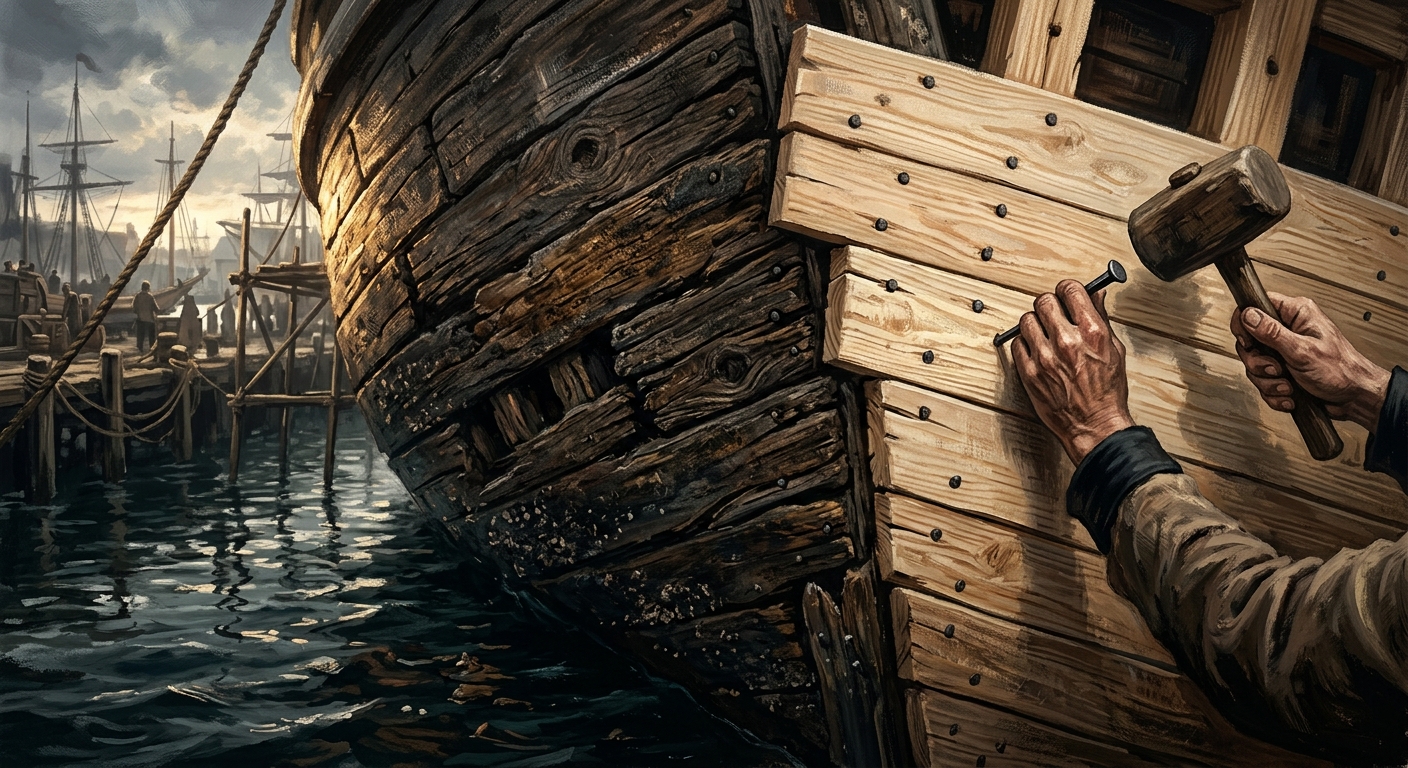
A ship sits in an Athenian harbor. It is old, famous, and slowly falling apart. Every time a plank rots, the Athenians swap it for fresh timber. This goes on for generations. At some point, a reasonable person looks at the vessel and asks: is this still the same ship, or is it a completely different object wearing a borrowed name? That question, simple enough to explain to a child, has refused to stay answered for roughly two thousand years.
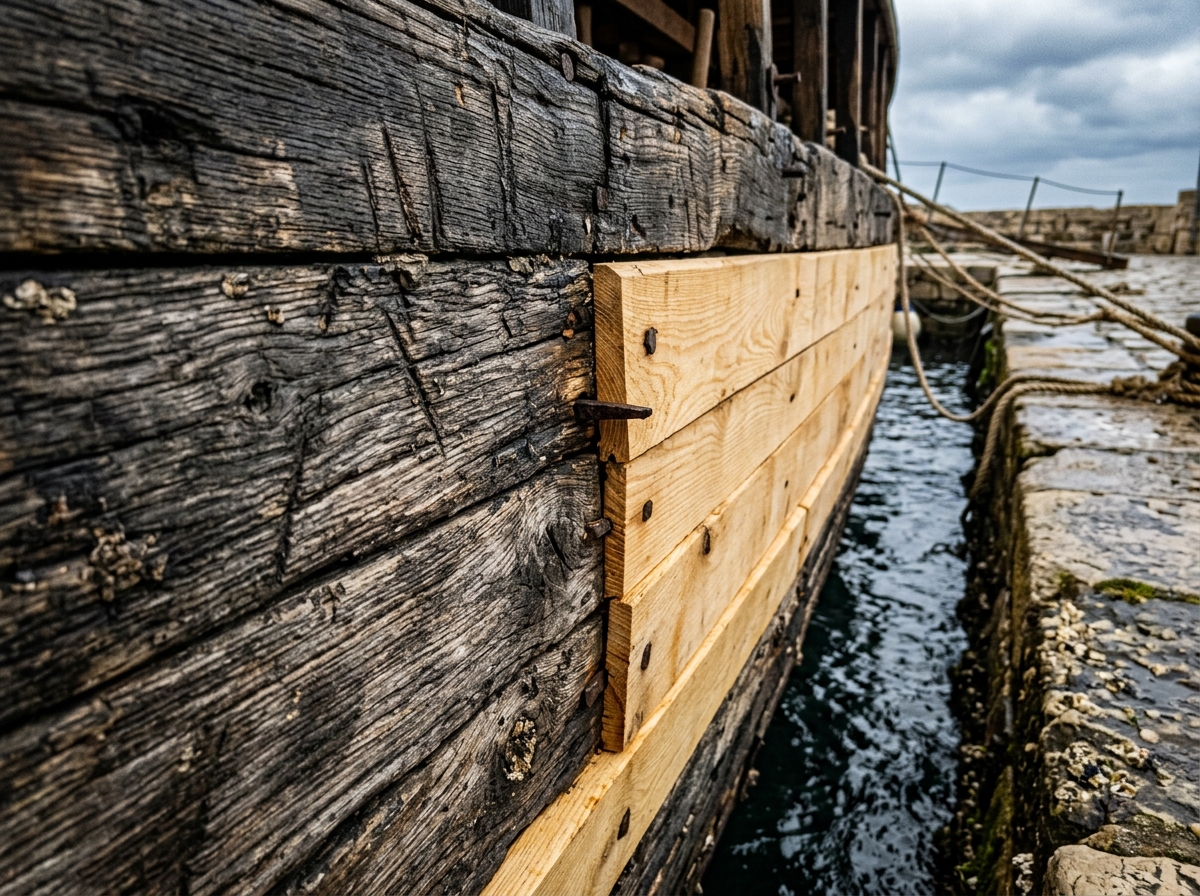
The Paradox at the Dock
The thought experiment comes from ancient Greek mythology and was recorded most famously by the historian and philosopher Plutarch. The Athenians kept the ship that Theseus supposedly sailed to Crete as a kind of living monument. They replaced the rotting planks as needed, one by one, over many years. The question eventually became unavoidable: when the last original plank was gone, had the memorial survived, or had it quietly died and been replaced by an imposter?
The puzzle feels almost too simple to be serious. That apparent simplicity is exactly what gives it staying power. The Ship of Theseus belongs to a family of problems about personal identity and the nature of physical objects. Anyone who has replaced a car engine, renovated a kitchen, or simply gone to sleep and woken up with slightly different cells has stepped into the same puzzle without realizing it. The ancient Greeks just happened to give it a memorable address.
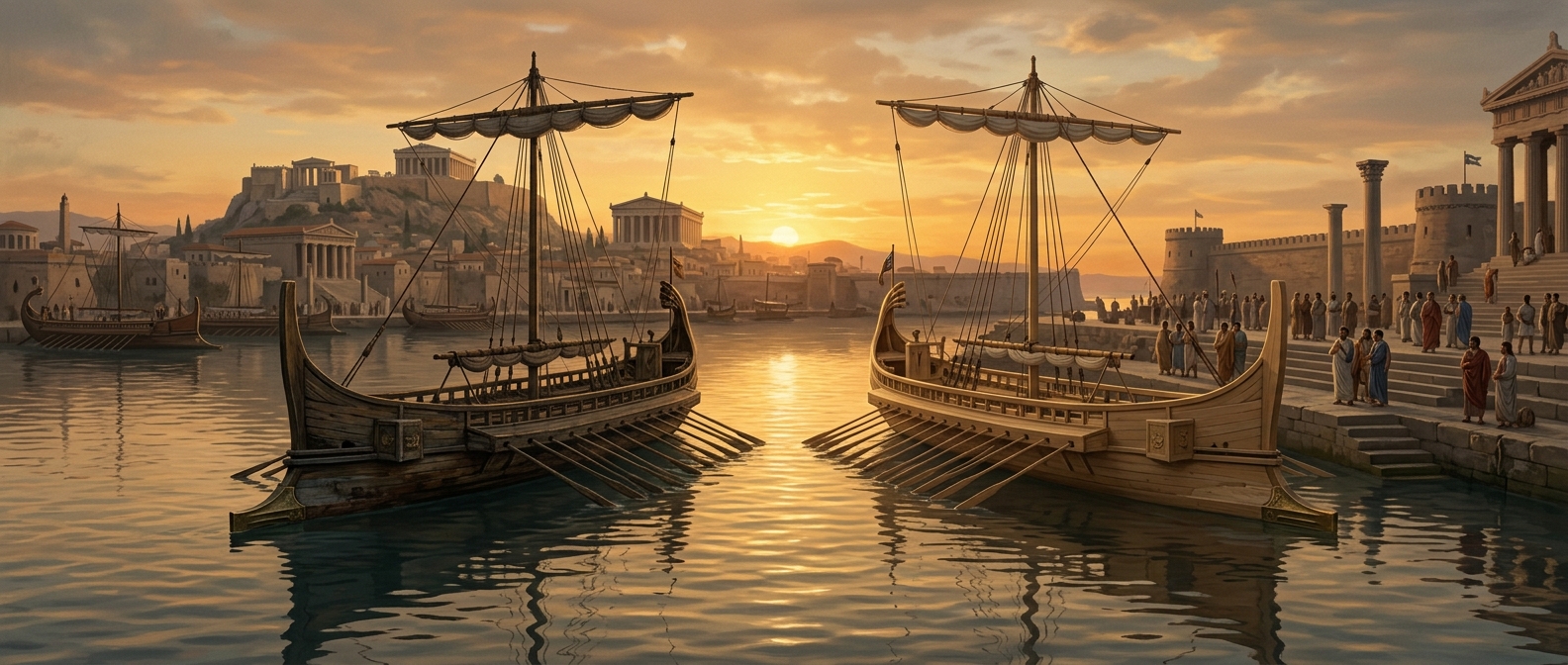
Here is the challenge: The Athenians have fully replaced every plank in Theseus's ship over several generations, always keeping it in service. A collector quietly salvaged each discarded original plank and has now reassembled them into a second, complete ship. Both vessels float in the same harbor. Which one is the real Ship of Theseus, and why? Can both be? Can neither be?
Two Rival Intuitions
Most people, on first hearing the problem, land somewhere in one of two camps. The camps have real philosophical names and traditions behind them, but the core disagreement is intuitive before it is technical.
The first camp says continuity is what matters. If the ship was repaired gradually, never taken out of service, and always recognized by the community as Theseus's vessel, then an unbroken chain of identity runs through every plank swap. No single replacement breaks that chain. The ship persists because its history and function persist.
The second camp gets sharpened by a clever extension of the scenario that the philosopher Thomas Hobbes developed in the seventeenth century. Imagine someone collected every discarded original plank and quietly reassembled them into a ship. Now there are two vessels. One has functional and historical continuity with the Athenian memorial. The other is built entirely from original material. Both have a serious claim to being the real Ship of Theseus. The fact that we now have two competitors with equally good arguments exposes a problem: neither continuity of function nor continuity of matter, taken alone, can close the case.
Philosophers have labeled these poles. Accounts that stress causal history and social recognition borrow from theories of personal identity, sometimes called psychological continuity views, even when applied to objects. Accounts that insist on material composition are called material constitution views. The tension between them is not merely academic. It shows up in courts, in boardrooms, and, uncomfortably, when you look in the mirror.
Identity Through the Philosophical Lens
Several major philosophical frameworks have taken a swing at the problem, each landing differently.
Aristotle's four causes offer a classical entry point. The formal cause, meaning the design, shape, and purpose of a ship, can persist even when every unit of the material cause has been swapped out. On this reading, identity tracks form rather than stuff. The ship remains the Ship of Theseus because it continues to be organized and used as that ship, not because it shares atoms with the original.
John Locke pushed the conversation forward by distinguishing between different kinds of things. A lump of gold obeys different identity rules than a living organism, and an artifact sits somewhere between the two. Locke opened the door to the idea that a ship might be more like a biological creature, whose persistence depends on functional organization, than like a simple heap of matter. That move allows for gradual replacement without automatic identity loss, which matches what most people feel intuitively about the original scenario.
Contemporary metaphysics has produced a more radical solution: four-dimensionalism. On this view, objects are extended through time just as they are extended through space. The Ship of Theseus is not a three-dimensional thing that exists at a moment. It is a four-dimensional whole, and its temporal parts include both the original planks and every replacement. Under this framework, asking whether the repaired ship is the same ship is like asking whether the front half of a banana is the same banana as the back half. The question assumes a picture of objects that four-dimensionalism rejects from the start. It dissolves the paradox rather than solving it, which is either satisfying or annoying depending on your temperament.
Answer: Why the Paradox Has No Single Verdict
The honest answer is that neither ship wins outright, and the reason why tells you more than any clean resolution would. The continuously repaired ship has the stronger claim if you believe identity is a matter of social recognition, unbroken history, and functional continuity. The reassembled original has the stronger claim if you believe identity is anchored in material composition. Both claims are internally consistent. The paradox survives because ordinary language and ordinary intuition make both answers feel correct at once.
What the puzzle actually reveals is that the word same is doing too much work. We use it to mean numerical identity (one single thing across time), qualitative similarity (two things sharing all properties), and conventional continuity (a name and role carried forward by agreement). The ship scenario forces those meanings apart. Once they separate, the question stops being unanswerable and starts being a choice: which kind of sameness do you care about most, and why?
That choice is not arbitrary. It has consequences. The Ship of Theseus problem surfaces in law whenever courts must decide whether a corporation that has replaced all its assets, staff, and leadership is the same entity that signed a contract or incurred a liability a decade ago. The philosophical arguments available for the ship translate almost directly into arguments about legal personhood, intellectual property, and debt. Judges do not cite Plutarch by name, but the structure of their reasoning is the same.
Rebuilt institutions raise the same flag. Is a democracy that has rewritten every article of its constitution still the same government? Is a restored ecosystem that shares no surviving organisms with the original still the same ecosystem? Is a digitally reconstructed painting, scanned, reprinted, and reframed, still the artwork the museum acquired in 1962? Each of these questions is the Ship of Theseus in different clothes.
For individuals, the paradox hits closest. Our bodies continuously replace cells across skin, gut, liver, and much of the skeleton over the course of years. And yet we hold people responsible for things they did a decade ago. We form relationships built on the assumption that the person in front of us today is continuous with the person we met years before. Whatever answer we accept for the ship, we are going to need a version of it for ourselves. Two thousand years of argument and the paradox is still undecided. That is not a failure. That is the sign of a question that keeps finding new rooms to haunt.