memory
The Memory Palace: How a Roman Trick for Public Speaking Ended Up Inside AI Research
An ancient technique built on spatial memory still shapes how memory athletes, students, and even AI researchers try to make information stick.
Frank4 min read

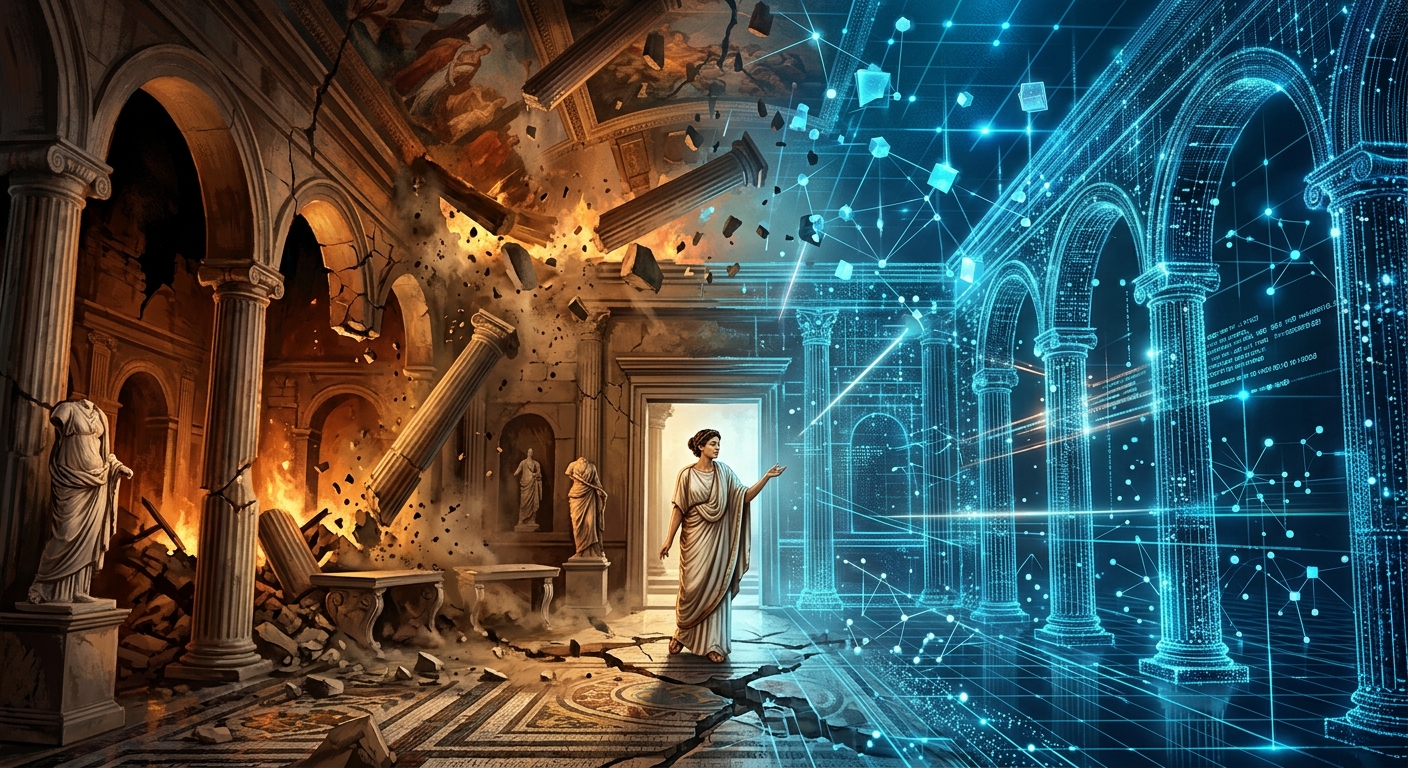
Before PowerPoint, before notecards, before anyone thought to write "see slide 12" on their hand, a Greek poet supposedly solved a horrifying identification problem using nothing but memory and geometry. Cicero and later Roman teachers built an entire system out of that story, one that modern memory champions and even artificial intelligence researchers are still borrowing from today.
The Legend of Simonides and the Banquet Hall Collapse
The traditional origin story goes like this: the poet Simonides of Ceos stepped outside a banquet hall moments before the roof collapsed, killing everyone still inside. The bodies were too mangled for family members to identify. Simonides, though, could recall exactly where each guest had been seated, and used that spatial memory to name the dead one by one. It is a grim founding myth for a memory technique, but it captures the core insight cleanly: our memory for physical space tends to outlast our memory for almost anything else.
Roman rhetoricians ran with that insight. Cicero and the anonymous author of the Rhetorica ad Herennium turned Simonides' accidental trick into a formal teaching method, instructing students to construct "memory palaces" out of buildings they already knew by heart, houses, temples, marketplaces, anywhere with rooms, corners, and a fixed layout. The goal was never poetry appreciation. It was practical. A Roman senator delivering a three-hour speech had no notes to glance at. He had architecture.
How the Technique Actually Works
The mechanics are almost embarrassingly simple once you see them laid out. A practitioner picks a real or imagined building they know intimately, then settles on a fixed walking route through its rooms, doorways, and furniture, always in the same order. Each stop along that route, called a locus, becomes a peg. Onto that peg, the person mentally hangs a vivid, often exaggerated image standing in for a fact, a word, or a piece of an argument.
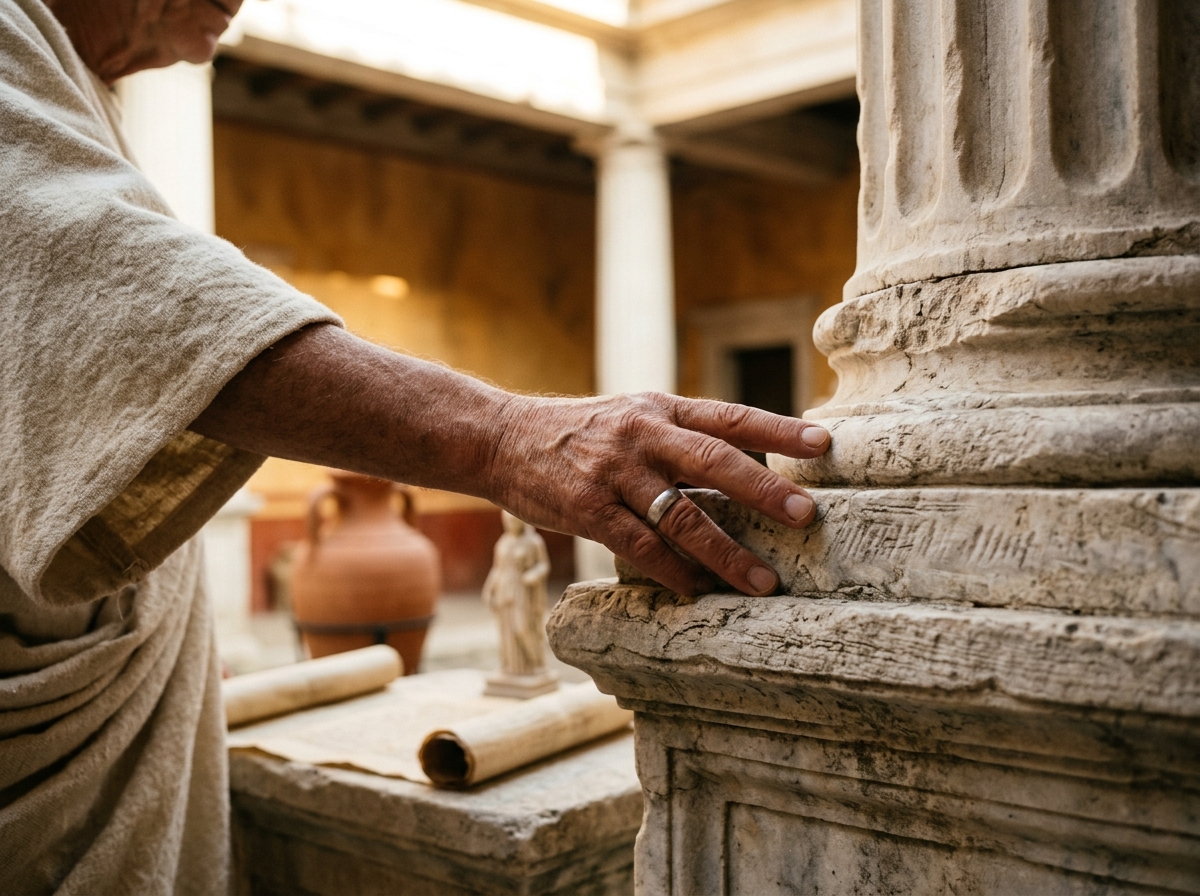
Recall then becomes a walk instead of a search. The orator retraces the same mental path, room by room, picking up each image in the order it was left there. Instead of holding a speech as a loose pile of facts, the brain holds it as a journey with a beginning, a middle, and an end. That structure alone does a lot of the memorization work before any content even gets memorized.
Why Space Sticks Better Than Words
There is a reason this trick has survived over two thousand years of fashion changes in education, and it has nothing to do with nostalgia for togas. Modern psychology points to the hippocampus, a brain region deeply involved in both spatial navigation and the formation of new long-term memories, as the likely engine behind the method of loci's effectiveness. Coverage from Psychology Today describes how pairing information with spatial cues and mental imagery taps into memory systems that are simply older and sturdier than rote verbal repetition. Repeating a list out loud twenty times is brute force. Walking through a remembered hallway is closer to using the grain of the wood.
The bizarre-image part matters too. Loci-based memory rewards the strange, the exaggerated, and the slightly absurd, because the brain is wired to notice and retain the unusual over the mundane. A memory palace filled with polite, ordinary images barely works better than a plain list. One filled with a giant rubber chicken wedged under the doorframe tends to stick without much effort at all. That is not a quirk of the technique, it is the entire point of it.
Here is the connecting thread that ties the ancient version to the modern one: the palace was never really about the building. It was about giving the brain a spatial excuse to do what it already does well, which is remember where things are.
From Roman Forums to Memory Championships and AI Research
The technique never actually went away, it just changed venues. Competitive memory athletes today still build elaborate palaces to memorize shuffled card decks, long strings of digits, and historical dates, running essentially the same cognitive software the Romans used for oratory, just aimed at a stopwatch instead of a Senate floor. Practical guides like the one from Smowl have repackaged the method for students, walking through step-by-step examples of building a palace for exam prep or vocabulary drilling rather than public speaking, proof that the underlying trick is genuinely content agnostic.
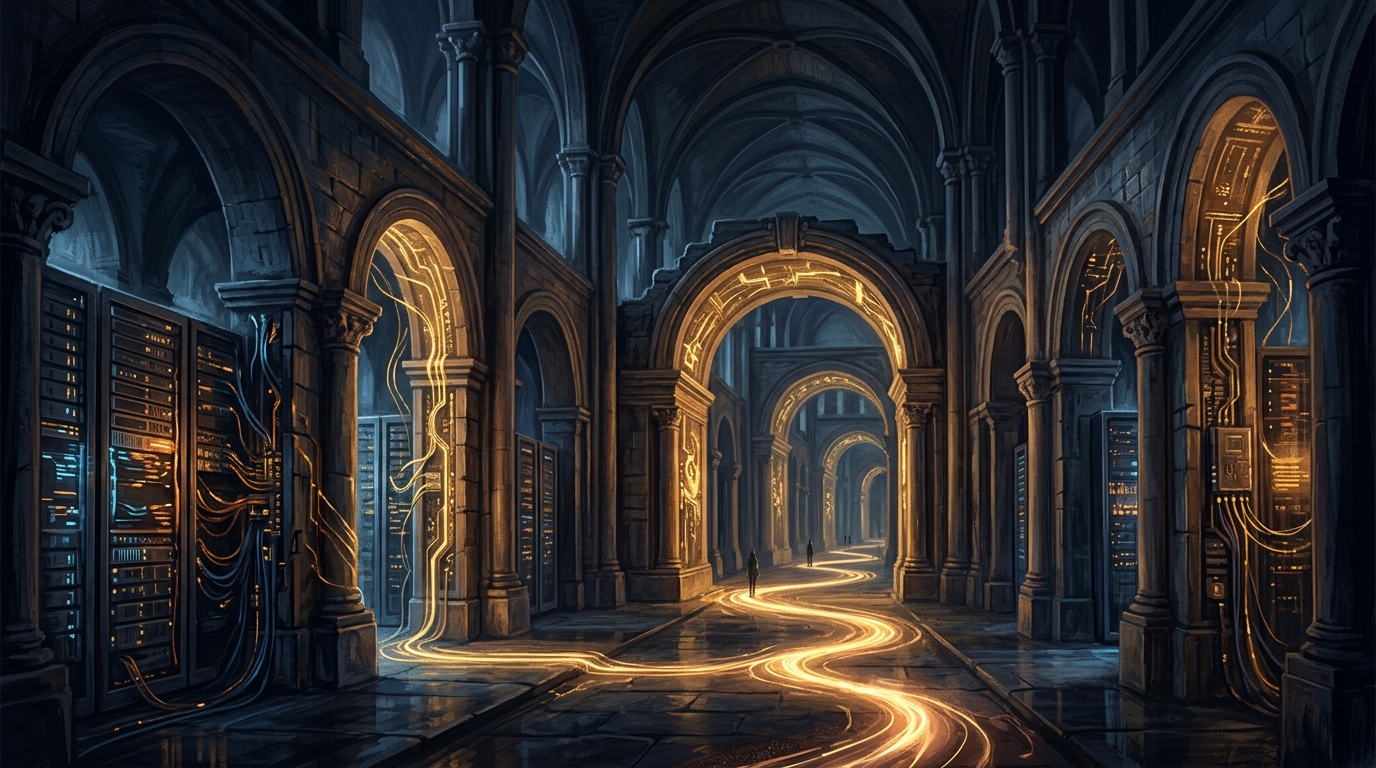
More surprising is where the metaphor has traveled next. A recent paper examining an architecture called MemPalace critically investigates whether giving large language models a simulated spatial memory structure actually improves how well they recall and retrieve information. Researchers are, in effect, asking whether software built with no hippocampus at all can benefit from the same room-by-room trick that helped a Roman orator hold a three-hour speech in his head. Two thousand years after Simonides walked out of that banquet hall, the same basic bet is still on the table, that turning information into a place you can walk through beats trying to hold it as a pile of disconnected facts.