brain exercises
Stop Highlighting Your Notes: The Five-Minute Memory Habit That Actually Sticks
Rereading feels like learning and mostly isn't, so spend a few minutes a day pulling answers out of your own head instead.
Tony4 min read

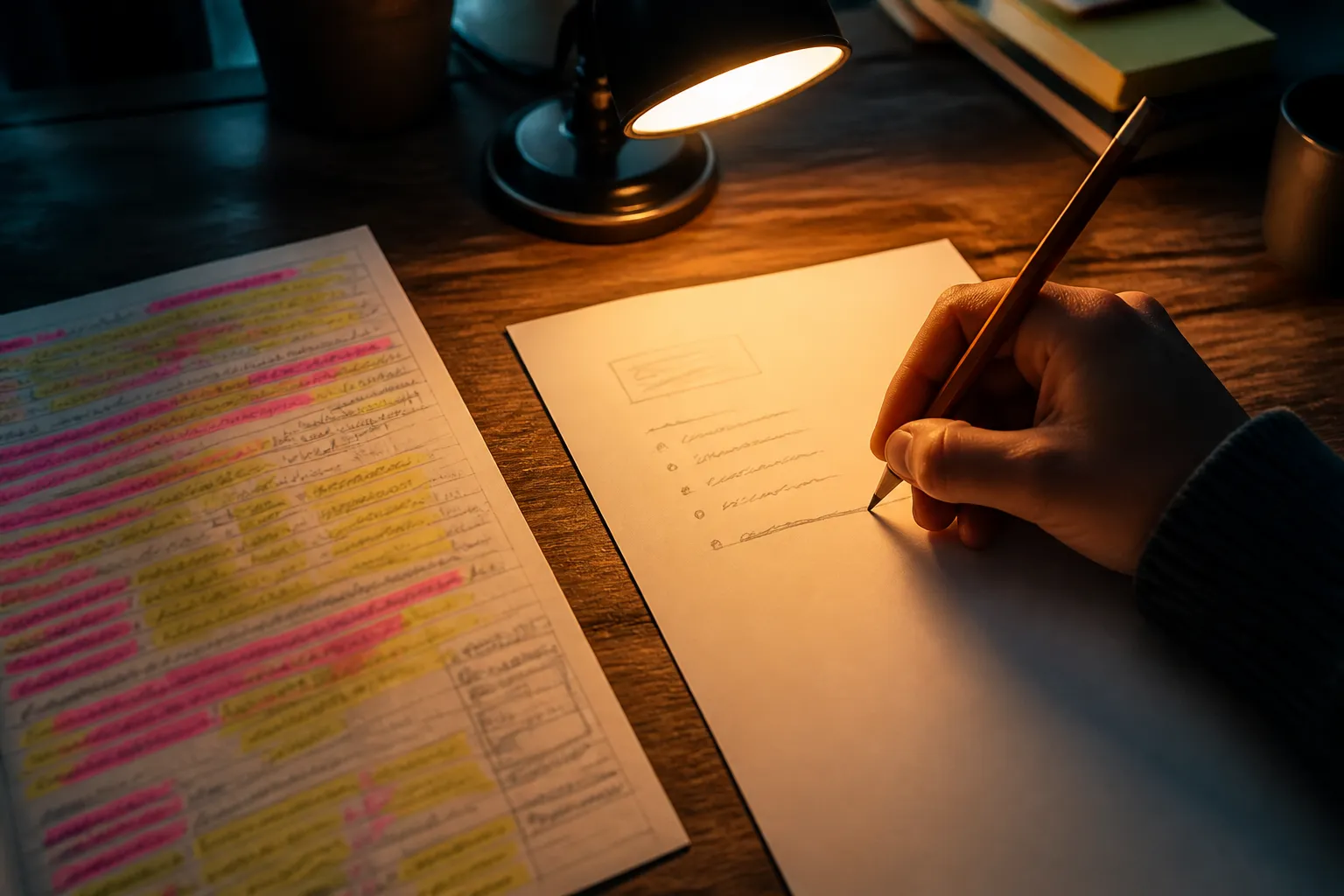
I have built things that made grown engineers weep, and I still reread nothing. Most people, however, spend their evenings dragging a highlighter across their notes like it's a rite of passage. It feels wonderful. It also barely works. Allow me to explain why, and what to do in about five minutes a day instead.
Testing yourself is more effective than re-studying the same material, even though re-reading feels more productive at the time.
Why rereading feels productive but fails
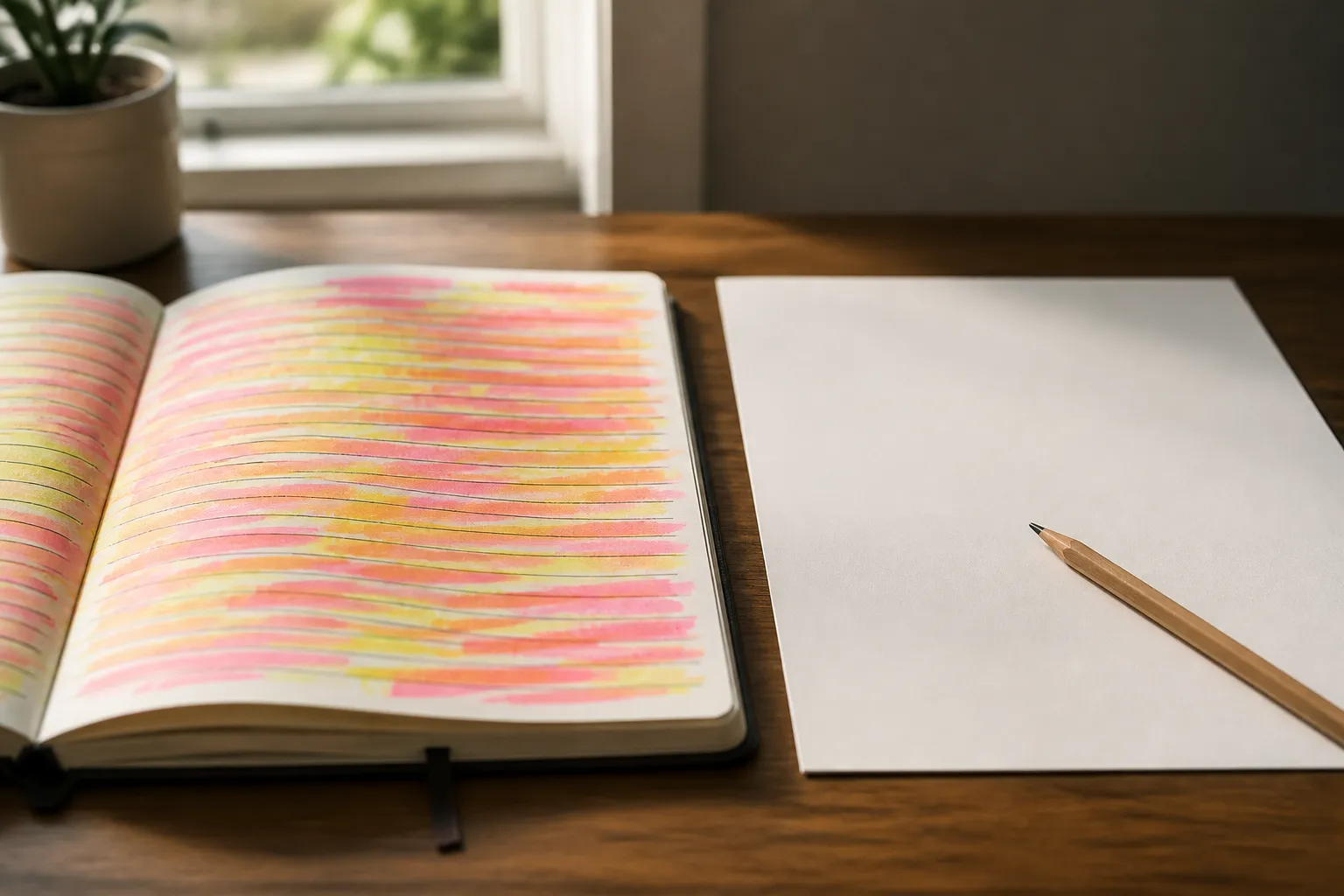
Rereading is a flattering technique. The words look familiar, the sentences glide, and your brain announces that it has the material handled. That is fluency, and it is mostly the pleasure of recognising text on a page. Recognising an answer is not the same as producing one with nothing in front of you. Cramming runs on exactly this short-term familiarity, and that familiarity fades fast.
The counterintuitive part is the verdict. Self-testing beats re-studying the same material, even though re-reading feels like the better use of time. So your gut is a poor judge of your own learning. If you pick a study method by how smooth it feels, you will overestimate what you can retrieve weeks later. Try it on yourself. Reread a page, then close it and write down what you can. Humbling, isn't it?
How the testing effect and spacing effect work together
Spaced retrieval is two well-supported ideas wearing one coat. The testing effect says that pulling information out of memory strengthens it more than reading it again. The spacing effect says that practice spread over days beats the same practice crammed into one sitting. Combine them and you get spaced retrieval: testing yourself, with the practice spread out over time.
The timing logic is tidy. Memory fades fastest in the first hours and days after learning, then levels off. Revisit material at timed intervals and you slow that slide. Think of returning to a puzzle you could not crack last week. The gap does some of the work for you.
None of this is fashionable novelty. Hermann Ebbinghaus first studied the forgetting curve in 1885, using lists of nonsense syllables. Well over a century of people have known this, and most still reach for the highlighter. I find that fascinating, in a tragic sort of way.
Building a five-minute daily routine
Here is my practical framing, and I will be honest about its status. The sources I trust do not specify a five-minute routine, and they give no exact spacing intervals. Five minutes is simply my sensible reading of the principle, not a tested protocol. What they do say is that short daily practice naturally spaces learning and keeps it active, with questions and cases that need minimal effort per session.
So the routine is modest. Write a handful of questions from your material. Each day, answer them from memory before checking anything. Mark what you missed and let it come back on later days. Do not invent a rigid schedule and pretend it is science.
Then mix the topics. Interleaving means mixing subjects rather than blocking one for long stretches. Each question then forces you to work out what kind of problem it is, and retrieve the right knowledge. That is harder. Harder is the point.
Choosing practice and judging whether it works
Any app, deck or notebook can be tested against two criteria. First, does it make you recall from memory rather than recognise or reread? Second, does it bring material back after gaps of days or weeks instead of one pass? Both sources point to these tests. A third check helps: does it mix topics, and is the session short enough that you will actually do it tomorrow?
Streaks and tracking earn a small round of applause. They support the consistency the method needs. They do not replace retrieval itself. A 200-day streak of passively flipping through answers is just a very dedicated way of rereading.
Now the limits, stated plainly. The sources centre on medical revision and memory support, not general brain-training puzzles, trivia or IQ-style challenges. They also do not explain how to measure whether a daily routine is working over time. A practical habit, then: check yourself on older material after a gap and see what survives. That is my suggestion, not a finding. Take it, because it is good.