IQ Challenges
The Phantom Fourth Shape: Draw a Shape's Ghost
A shape's phantom is built from arcs centred on its own corners. The Reuleaux triangle turns out to be its own phantom, and you can draw it with a compass.
Tony4 min read
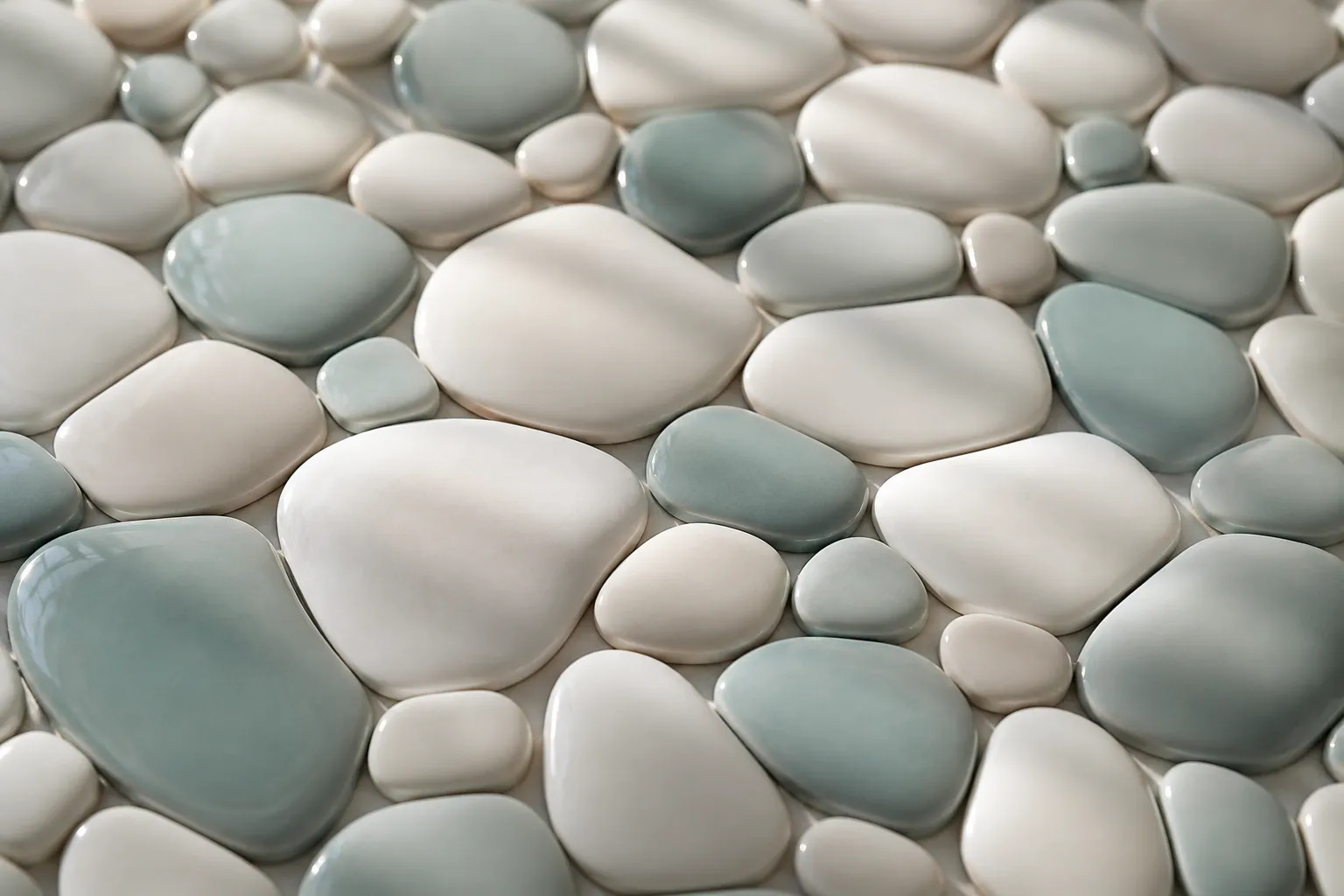
Start with a shape you know. Draw an arc from each corner, using the shape's own size as the radius. The curve you get is the shape's phantom. Sometimes the phantom is the same shape, turned or flipped. One famous shape is its own phantom.
What a phantom is
The idea comes from a maths explainer on plus.maths.org called Ghosts in the tiling. There, a phantom of a shape is bounded by arcs drawn with the original radius, centred on the original shape's vertices. The result is the same shape, rotated or reflected.
That is a small idea with a odd twist. You begin with corners and end with curves. Then you can run the process backwards. The centres of the phantom's arcs sit exactly at the original's vertices, so each shape points back to the other. The two are linked like a shape and its reflection in a pond.
The Reuleaux triangle, its own ghost
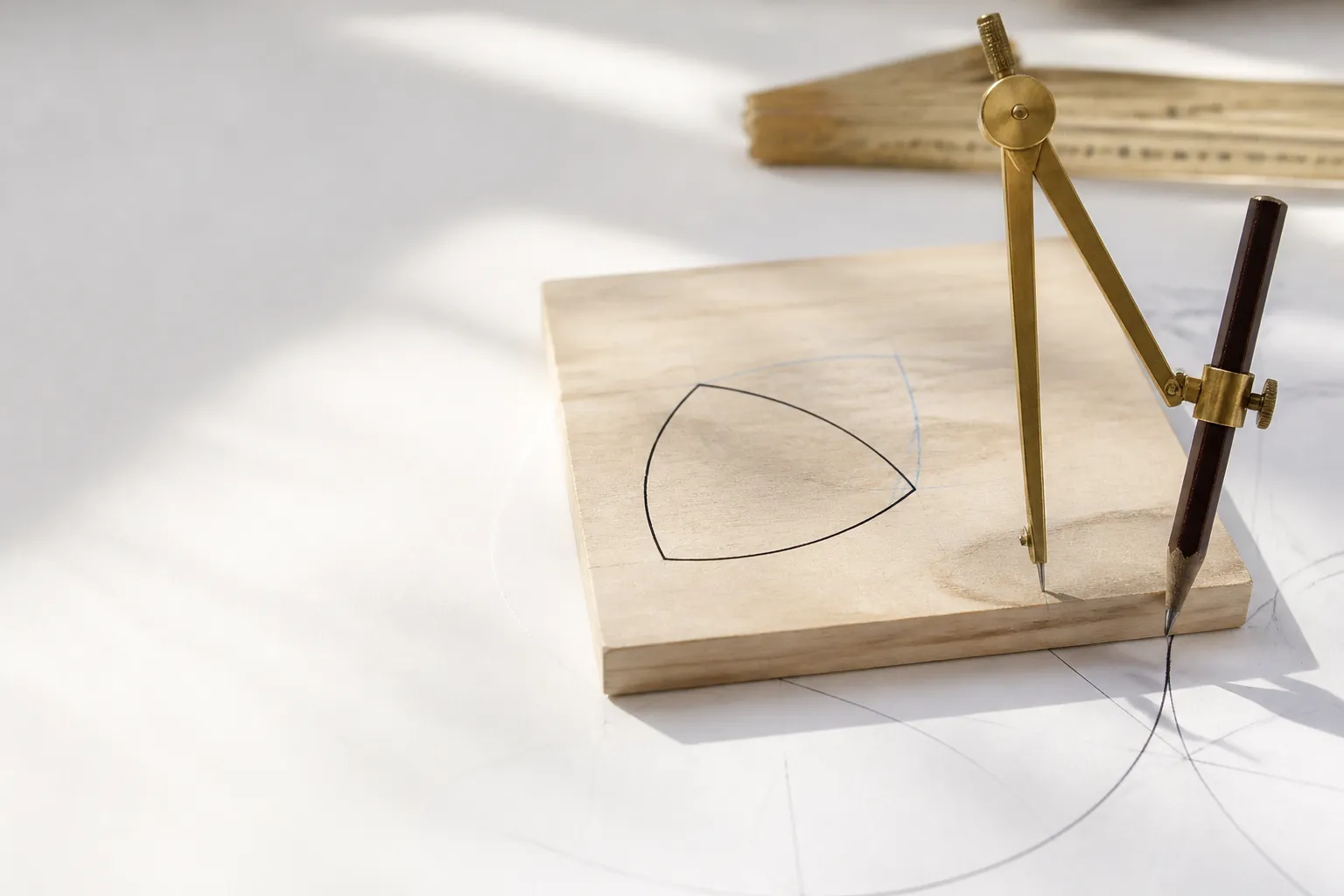
The standout example is the Reuleaux triangle. It has three curved sides, and each arc subtends a 60 degree angle at the vertex opposite it. Build its phantom and you get the Reuleaux triangle again. The source calls this self-referencing: the shape is its own phantom.
The article describes three arc-sided shapes whose phantoms are rotated or mirrored copies of themselves. It names the Reuleaux triangle. The sources I have do not identify the other two, so I will not guess. Nor do they give a formal proof of the construction beyond the process described. Treat this as a clear picture, not a full theorem.
How to build one yourself
Here is the process in plain steps, following the plus.maths.org description.
- Pick a shape with vertices.
- Set a radius equal to the original size of the shape.
- From each vertex, draw an arc of that radius.
- The endpoints of those arcs mark out the phantom.
- Check the reverse: the phantom's arc centres should land on the original's vertices.
Try it with a compass. Draw an equilateral triangle first. Put the compass point on one corner and sweep an arc between the other two. Repeat from each corner. You have just drawn a Reuleaux triangle. Now ask what its phantom looks like. Compare your answer with the original. Check whether the arcs and corners line up the way the explainer says they should.
This is a good small exercise in spatial thinking. You hold a shape in mind, imagine a transformation, and test the result by hand. The sources do not frame it as brain training, so I make no claim about benefits. It is simply a tidy puzzle with an answer you can verify on paper.
Two other meanings of phantom
The word shows up elsewhere, and it helps to keep the senses apart. Project Gutenberg catalogues a book of ghost stories, A Stable for Nightmares; or, Weird Tales by Le Fanu and Young. One story is titled "The phantom fourth." The catalogue page does not say what the story contains, and its summary is automatically generated, so it is not a reliable guide. That is a ghost story, not geometry.
Medical imaging also uses phantoms, meaning test objects and computer models for scanners. That is a different field again, and it has nothing to do with tiling. So if a teaser promises a phantom fourth shape, check which meaning it intends. I could not confirm that any source defines a shape by that exact name.
Where soft cells fit
A neighbouring topic is worth a mention. Researchers led by Gabor Domokos have described soft cells, curved tiles that fill space with few or no sharp corners. EurekAlert reports the work appeared in PNAS Nexus, and Mirage News lists collaborators at Oxford and the Budapest University of Technology and Economics. Neither release gives a date I can verify here, so check the original paper for timing.
Soft cells and phantoms are separate ideas. Both make you look at curved boundaries in a new way. The soft cell authors say such forms echo nature, including seashell chambers and onion layers. The phantom construction is a drawing exercise, not a claim about biology.
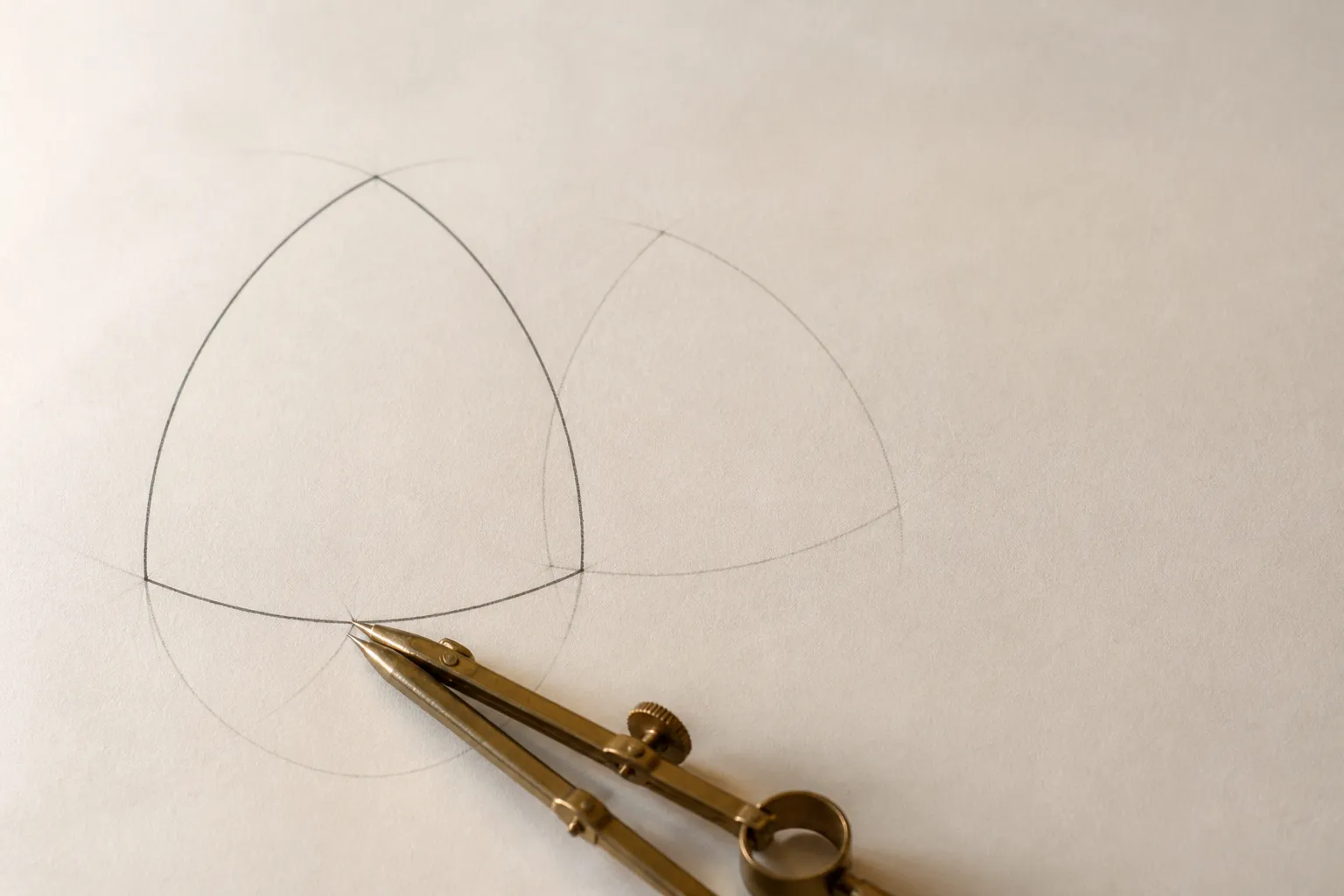
Grab a compass and a sheet of paper. Draw the Reuleaux triangle, then its phantom. The ghost should look very familiar.