puzzles
The Knights and Knaves Grid: Truth, Lies, and Knowing When to Stop
A short guide to Knights and Knaves, with a worked example, a puzzle for you to try, and the answer after.
Tony4 min read

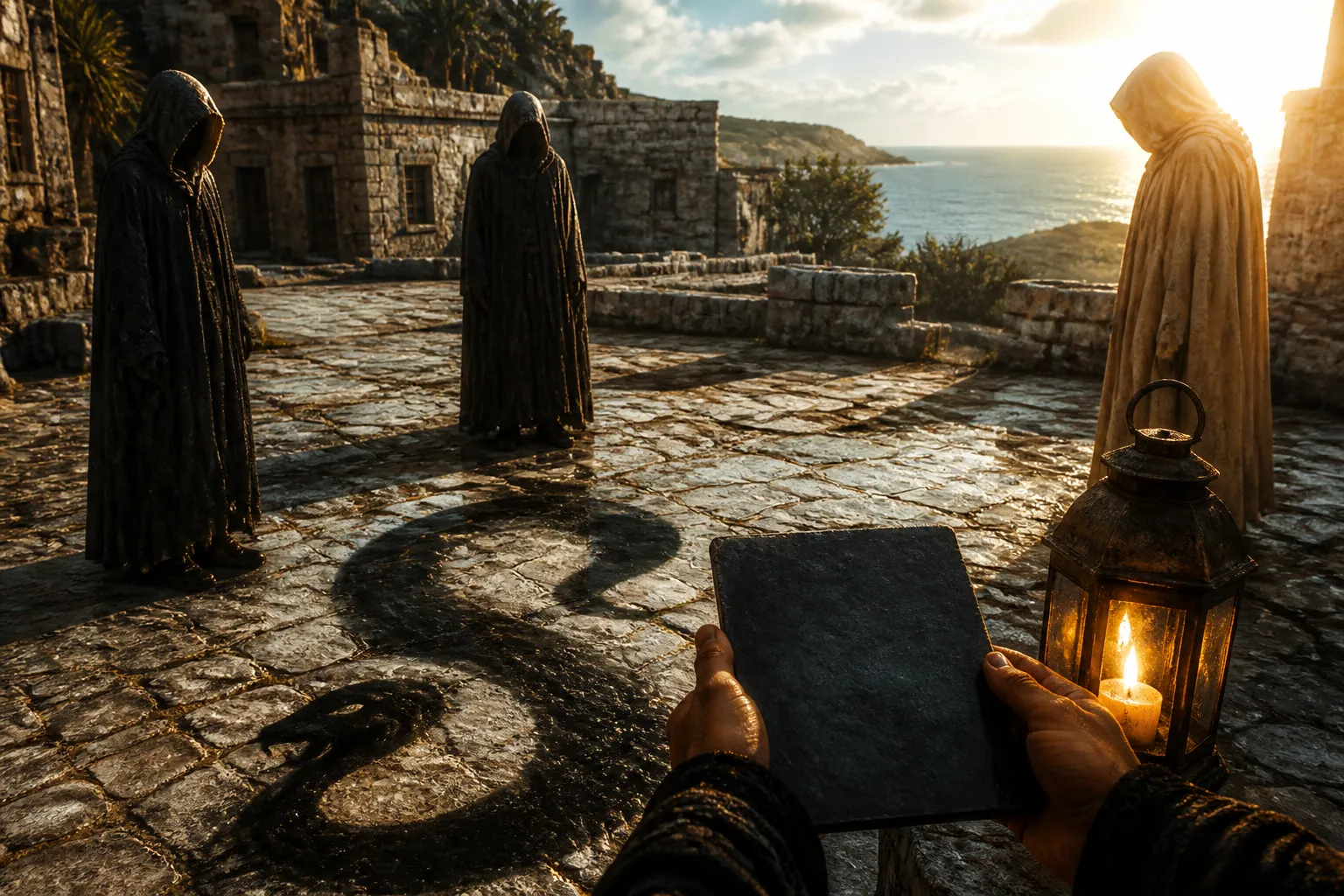
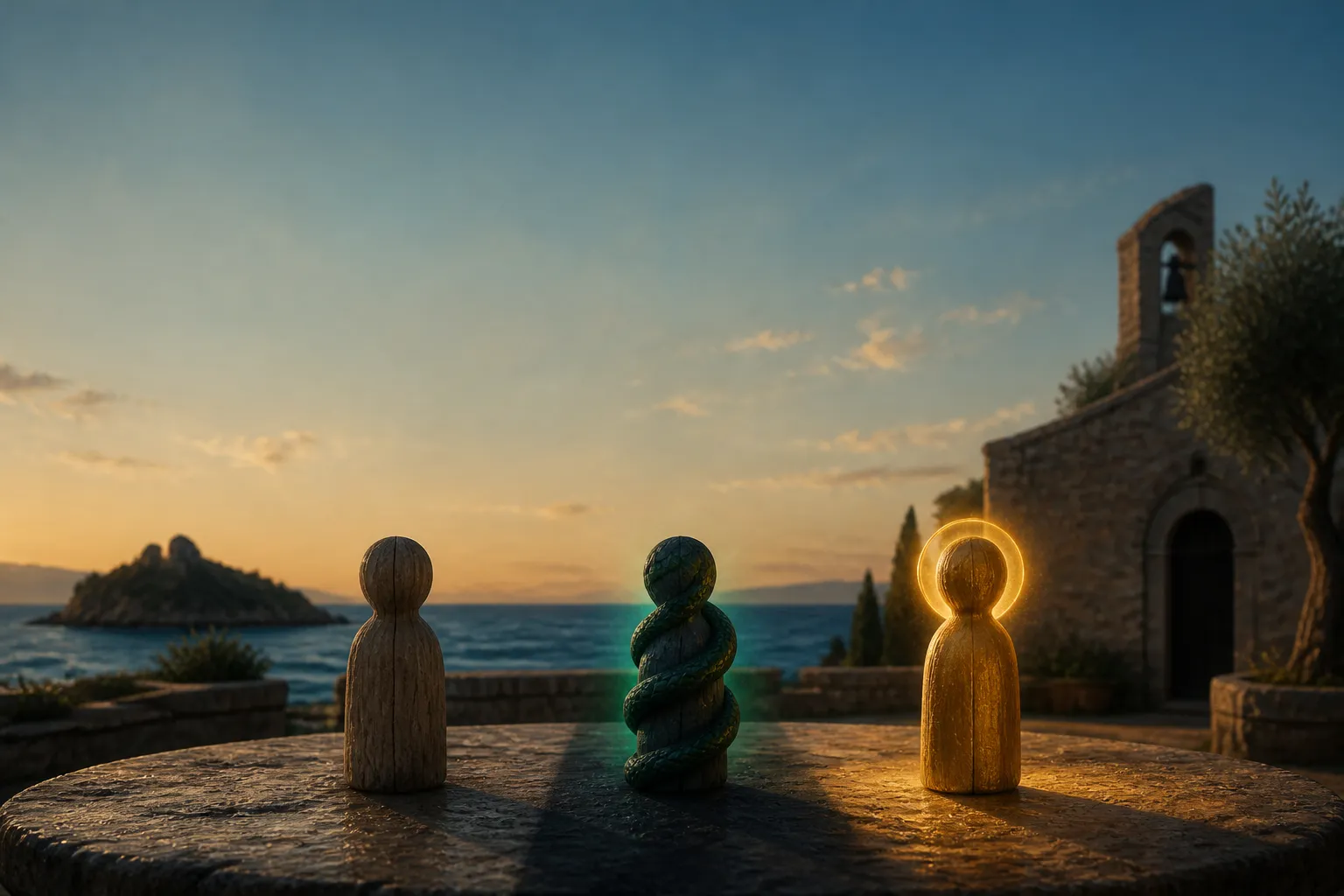
Picture an island where everyone is either a saint or a snake. Saints never lie. Snakes never tell the truth. You hear a few sentences from each. You get no fingerprints and no outside tips, just your own head.
What the puzzle is
Knights and Knaves is a logic puzzle where some characters always answer truthfully and others always answer falsely. Raymond Smullyan coined the name in his 1978 work What Is the Name of This Book? You will also see these called liars and truth-tellers problems. The setting is a fictional island where every inhabitant is a knight or a knave. You play a visitor who meets small groups of them.
No math degree is needed, only careful reasoning about what truth and lies mean. Nobody's shifty eyes matter. Nobody's tone of voice matters. You have sentences, and the question of whether each one can possibly be true.
How the rules constrain each statement
Every statement a knight makes is true. Every statement a knave makes is false. That is the whole rulebook, and it does a lot of work. Each sentence tells you something about the speaker and about anyone the speaker mentions.
Statements come in a few forms: direct claims about others ("B is a knight"), self-references ("I am a knight"), and relationship claims ("A and B are the same type"). The skill is testing each form against each possible speaker. Assume the speaker is a knight and see whether the sentence survives. Assume a knave and do the same. Usually one assumption wrecks itself, and the other stands.
A worked example
Take three islanders. B says, "A said that they are a knave." C says, "Don't believe B; they are lying!" Who is who?
Start with the claim inside B's sentence. No one on the island can say they are a knave. A knight would be lying by saying it. A knave would be accidentally telling the truth. So A never said that, and B's report is false. B is a knave. C says B is lying, which is true, so C is a knight.
A is the odd one out. A's answer to "what are you?" would be "I'm a knight" whether A is a knight or a knave. So A's type cannot be determined from this exchange. The puzzle is sound and still leaves one person unresolved. Knowing when the evidence has run out is part of the skill.
Try one yourself
Here is a short puzzle to attempt before reading on. Use the assume-and-test habit from above.
Two islanders, P and Q, are each a knight or a knave. P says, "Q is a knave." Q says, "P and I are the same type." What is each of them?
Give it a few minutes. Try P as a knight first, then P as a knave, and check Q's sentence each time.
Answer
P is a knight and Q is a knave. Suppose P is a knight. Then P's statement is true, so Q is a knave. Q claims they are the same type, which is false, and a knave must say something false. That fits. Now suppose P is a knave. Then P's statement is false, so Q is a knight. But Q says they are the same type, and P is a knave while Q is a knight, so Q's statement is false. A knight cannot say that. This case breaks, and only the first one remains.
Variations and history
Smullyan gets the credit for the name, but he did not invent the genre from nothing. Maurice Kraitchik presented the same type of puzzle in his 1953 book Mathematical Recreations, using two groups called the Arbus and the Bosnins.
Then the island gets crowded. Some variations add alternators, who alternate between lying and telling the truth, and normals, who can say anything. In one variant, islanders answer in their own language. You know "bal" and "da" mean yes and no, but not which is which. Other puzzles do not ask for anyone's type at all. They ask for a single yes-no question that will reveal a fact.
Researchers have also taken the idea onto graphs. One 2021 paper, "Knights and Liars on Graphs" by Tabatabai and Gruber, appeared in the Journal of Integer Sequences. The sources here describe it only through abstracts, so the details are beyond this piece.
Questions to ask before solving
Before you start, check three things.
- What is being asked: every inhabitant's type, or a yes-no question to put to them?
- Are all inhabitants strictly knights or knaves, or do alternators or normals appear?
- Does anyone claim "I am a knave"? Neither type can say that, so reread the puzzle for a misquote or a different variant.
The sources give examples, not a step-by-step method for harder puzzles. So build your own habit: assume, test, discard. And if two readings both survive, say so. A puzzle that leaves one islander unresolved is not broken.