IQ Challenges
The Syllogism Scramble: Can You Deduce the Valid Conclusion from These Premises?
A single logical puzzle reveals why our most confident conclusions are sometimes the least valid, and how a 2,400-year-old framework still catches us out.
Charlie6 min read

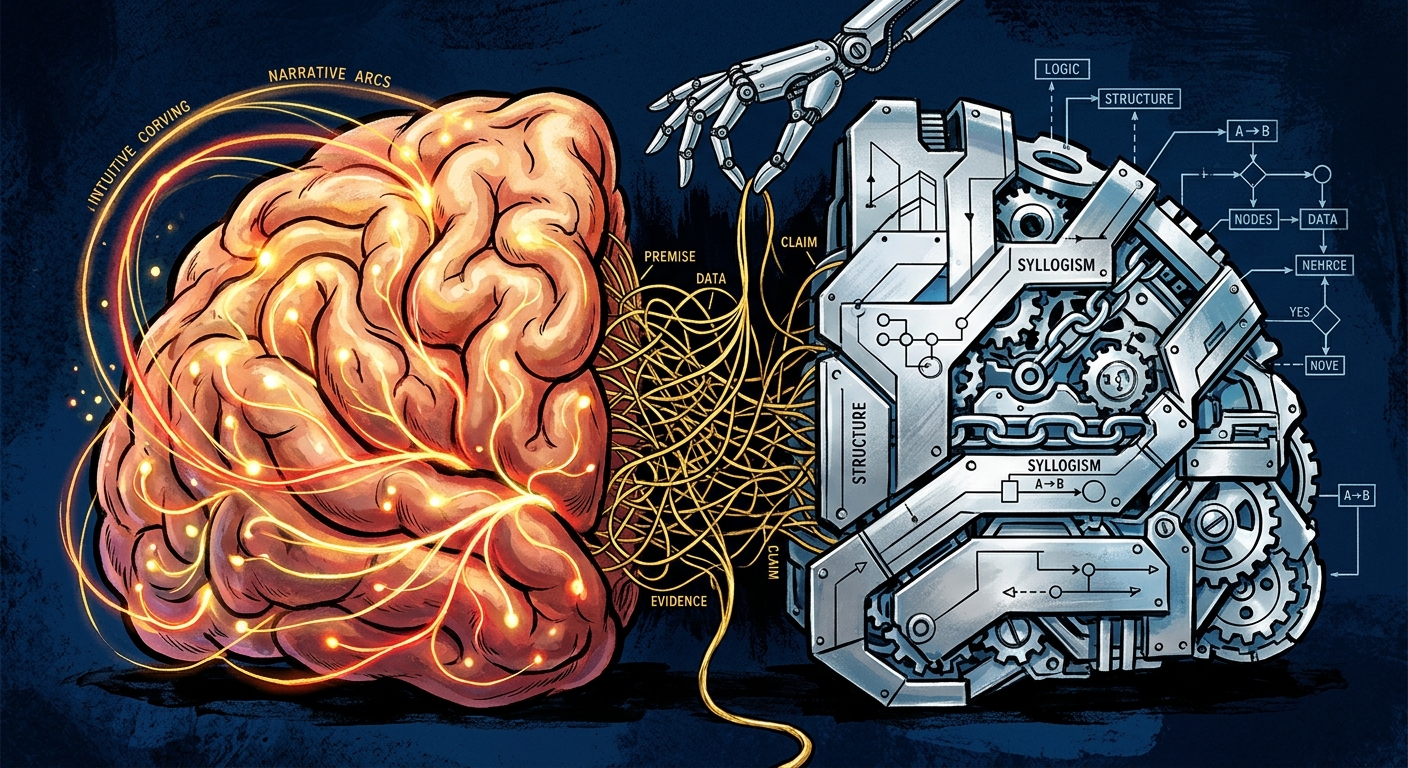
Our minds are wired for narrative, seeking connections that feel right rather than those that are strictly necessary. That instinct is useful in daily life. In formal logic, it gets you into trouble. The syllogism demands a different discipline: not what seems plausible, but what must follow. Can you untangle the logical threads in this classic scramble?
Consider the following premises:
- All mammals have hair.
- My pet has hair.
What valid conclusion, if any, can be drawn from these statements?
Think Before You Conclude
Take a moment. Resist the first conclusion that feels correct. Syllogisms hide traps that exploit shortcut thinking, and precision is the only way through. Ask yourself one question: does your conclusion necessarily follow from both premises, or is it merely possible given them? Those are very different standards, and confusing them is exactly where most solvers go wrong.
The puzzle above looks almost trivially simple. Most pets are mammals. Hair fits. The conclusion assembles itself in your head before you have finished reading. That speed is the trap.
The Answer Is No Valid Conclusion
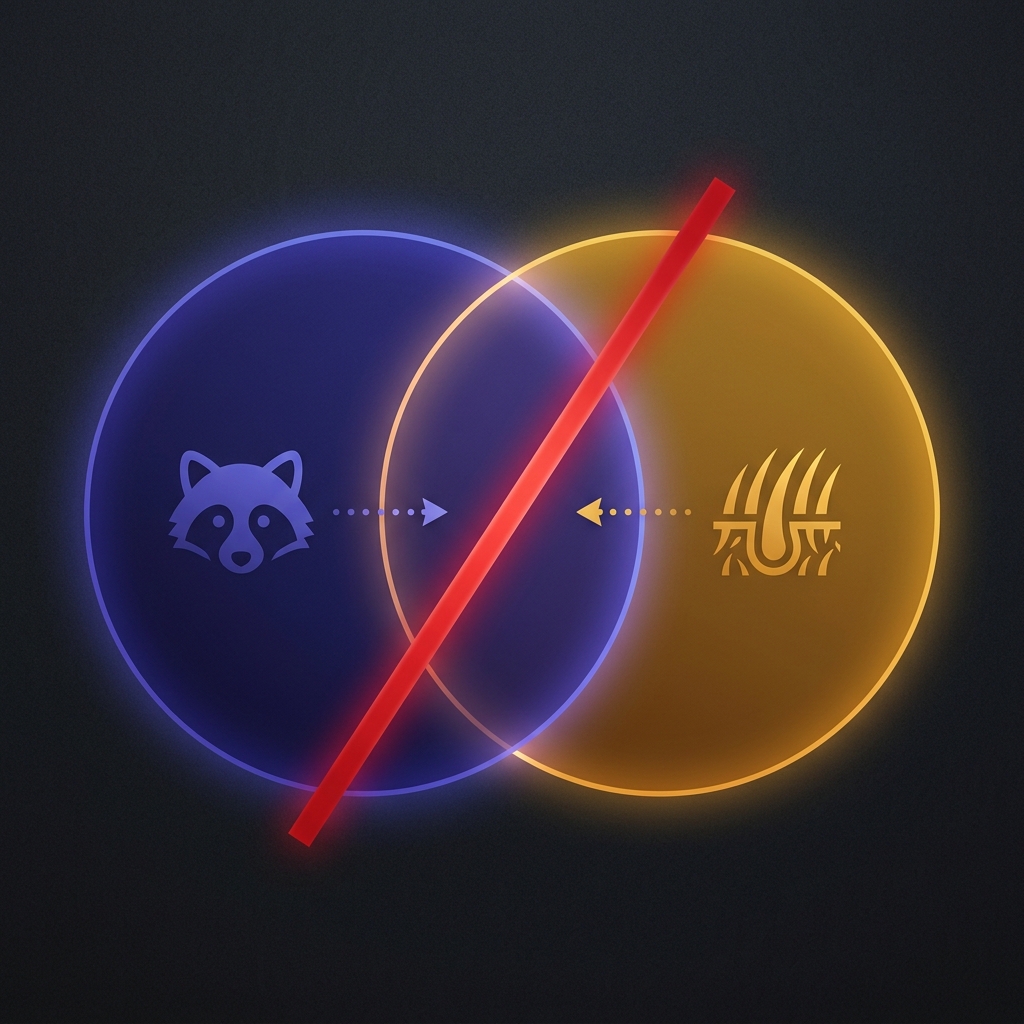
If you concluded that your pet is a mammal, you fell into one of formal logic's most common errors. The premises do not force that conclusion. Here is why: the first premise tells us that all mammals have hair, but it says nothing about whether only mammals have hair. The second premise notes that your pet has hair. Hair, in this argument, is the middle term, and it never gets distributed universally enough to connect "my pet" directly to "mammals." Your pet could be a hairy spider, a coconut crab, or any number of creatures that have hair-like structures without being mammals. In that case, both premises remain true and the mammal conclusion is false, which means the argument is invalid by definition.
For a syllogism to be valid, it must be impossible for the premises to be true and the conclusion false at the same time. That bar is high, and our hair puzzle does not clear it. A formally valid version would flip the major premise: "Only mammals have hair" would license the conclusion. But that premise is not given, and logic does not let you borrow it from background knowledge.

What a Syllogism Actually Is
A syllogism is a structured deductive argument built from exactly three parts: a major premise, a minor premise, and a conclusion. The form dates to Aristotle's Prior Analytics and remains the foundation of categorical logic taught today [1]. The core principle is that if the premises are true, the conclusion must also be true, with no room for probabilistic hedging. The canonical example makes this feel obvious: "All men are mortal; Socrates is a man; therefore, Socrates is mortal." A universal claim about a category, paired with a specific case that belongs to that category, yields an inescapable outcome [2].
What separates a syllogism from looser argumentation is formal validity. Researchers studying categorical syllogisms have identified 256 possible forms, of which only 24 are valid [1]. The conclusion is not just reasonable in those 24. It is logically compelled by the relationship between the premises, full stop.
The Anatomy of Errors: Why Logic Trips Us Up
When premises arrive outside their ideal structure or embedded in everyday language, most people unconsciously substitute intuitive judgment for rigorous inference. This leads to accepting conclusions that feel right even when the logical chain is broken. The error in our pet puzzle is a textbook instance of the undistributed middle fallacy: the shared term linking the two premises, "has hair," never applies universally enough to license the conclusion. The middle term must be distributed, meaning it must refer to all members of its category, at least once in the premises. "All mammals have hair" distributes mammals but not hair. "My pet has hair" distributes neither. The connection fails [1].
A related problem is belief bias: when a conclusion matches what we already believe, we tend to rate logically invalid arguments as valid anyway. Studies in cognitive psychology find that emotional content and prior beliefs can override formal analysis, making people endorse broken arguments simply because the conclusion sounds true [3]. Most pets really are mammals. That background fact floods the argument and papers over the missing logical step.
Key Rules for Checking Validity
Classical syllogistic logic provides a short checklist for anyone who wants to evaluate an argument rather than just react to it. The rules below are not arbitrary conventions; each one blocks a specific class of error that produces the wrong conclusion from plausible-sounding premises.
- Exactly three terms, used consistently. Shifting the meaning of a word mid-argument creates a false middle term and breaks the chain.
- The middle term must be distributed at least once. If the shared term never refers to all members of its category, no necessary link forms between the other two terms.
- A term distributed in the conclusion must have been distributed in its premise. Expanding scope in the conclusion without grounding it in a premise commits the illicit major or illicit minor fallacy.
- Two negative premises yield no valid conclusion. When both premises exclude categories from one another, there is nothing left to connect.
- A particular premise cannot support a universal conclusion. "Some athletes are disciplined" combined with "all disciplined people succeed" does not produce "all athletes succeed."
Running an argument through this checklist takes about thirty seconds. The habit of doing so consistently is what separates careful reasoning from educated guessing. It also reveals how many everyday arguments, in opinion pieces, in meetings, in casual debate, quietly fail one of these tests while sounding entirely convincing.
Why Puzzle Practice Builds Real Reasoning
Framing syllogism challenges as puzzles gives the abstract rules a concrete payoff. The satisfaction of correctly spotting an invalid form, or confirming a valid one, makes the exercise feel immediate rather than academic. Puzzle formats also tend to introduce time pressure or misleading distractor options, which force solvers to slow down and apply explicit reasoning rather than gut instinct. That friction is the point.
The cognitive benefit extends beyond the puzzle itself. Practicing with syllogism problems builds the habit of demanding that conclusions earn their place, rather than borrowing credibility from plausible context. That habit translates directly into sharper reading of legal arguments, academic papers, and political claims, anywhere that formal-sounding language can dress up a broken logical chain. The skill is not about solving puzzles faster. It is about noticing, in real-time conversation, when the middle term has quietly gone undistributed and the conclusion does not actually follow.