puzzles
How Color-Coded Locks Transform Security Into Engaging Logic Puzzles
Erik's innovative color-sensing lock, initially conceived as a security device, unexpectedly becomes a fertile ground for developing complex logic puzzles that challenge observation and deductive reasoning.
Charlie6 min read

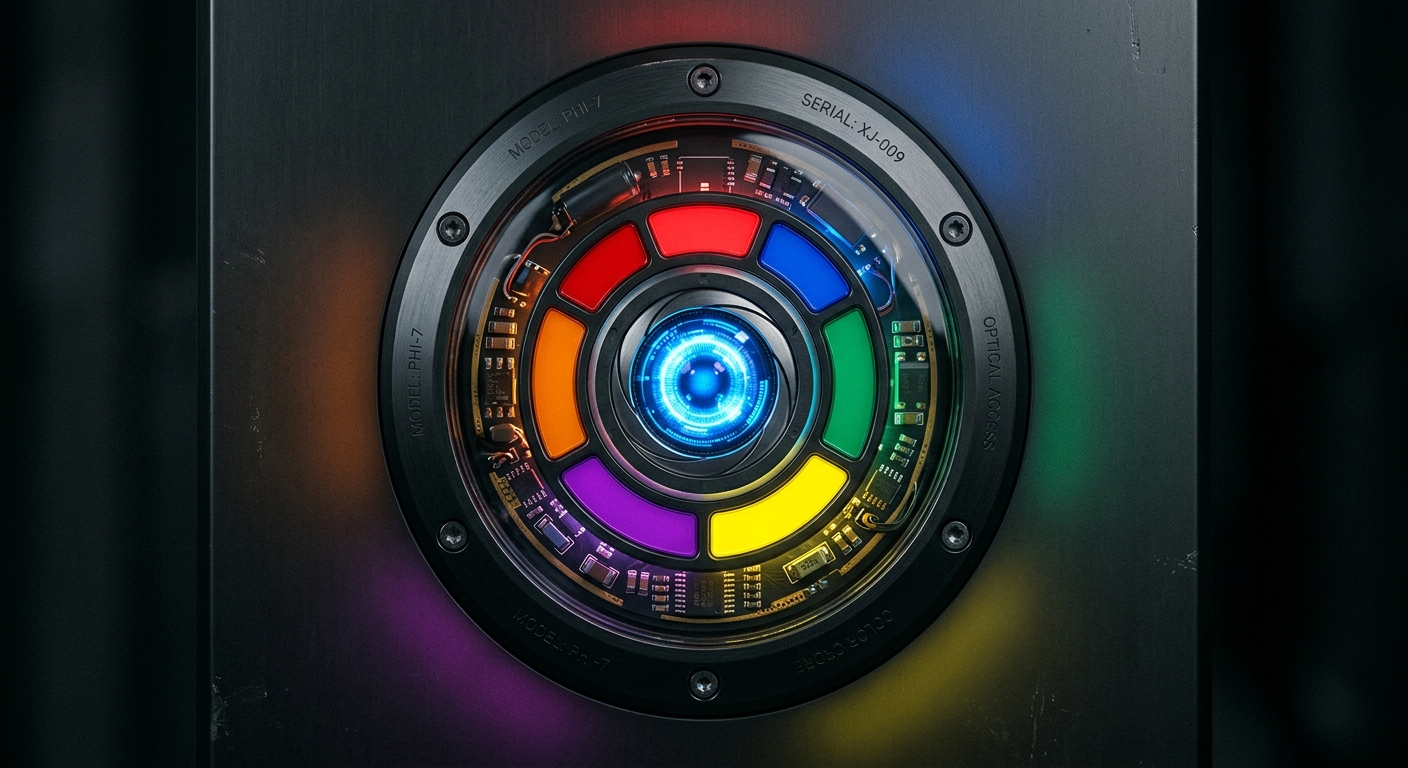
Imagine a lock that doesn't care about a physical key's cut or a digital credential's encryption. Instead, it reads a sequence of colors, a visual password presented to an optical sensor. This isn't science fiction; it's the core concept behind Erik's clever color-coded lock, a project documented on Hackaday in 2018. This innovation transforms a security device into a dynamic platform for cognitive challenge, offering a fascinating test of observation and deductive reasoning.
Erik's design uses a TCS230 color sensor to interpret patterns on color-coded cards, feeding this information to an Arduino Uno. The lock authenticates a user by comparing the observed color sequence against a stored pattern. Because this 'key' is a specific ordered presentation of colored surfaces, it's inherently copyable by anyone who observes the correct pattern. This shift from physical token to observable sequence opens up a rich vein for problem-solving, making who opened which door a surprisingly deep deduction game.
The Hardware Behind the Puzzle
At its heart, Erik's color-sensing lock operates on a simple principle: light input equals authentication. Rather than traditional tumblers or RFID tags, it relies on an optical sensor to detect a precise series of hues. This means the 'key' is really a specific, ordered presentation of colored surfaces, often small cards, to an embedded sensor. The system maps these detected hues to a lookup table, comparing the incoming color data against a stored sequence hash. A critical detail for any detective, and indeed for any puzzle designer, is that even slight deviations in color temperature or ambient lighting can cause a mismatch, leading to a failed authentication. This perceptual ambiguity is not a flaw; it's a feature, adding layers to any puzzle built around it.
This reliance on optical input means the authentication credential is not physically unique. Unlike a cut metal key, a color sequence can be reproduced by anyone with the right color cards and knowledge of the order. This makes the system less about preventing unauthorized replication and more about controlling information access. For our purposes, it transforms what looks like a security device into an intriguing puzzle about observation and information flow, where witness testimony about color and sequence becomes paramount.
Setting Up the Logic Puzzle
Consider a scenario: four distinct doors, each protected by a different color-sequence lock. Four individuals are present, each carrying a unique set of differently colored key cards. The puzzle asks you to deduce, from a set of clues and constraints, which person successfully opened which door. This framework borrows heavily from classic grid-logic puzzles. Each door has exactly one successful opener, each person opened exactly one door, and the color sequences are mutually exclusive, ensuring no two doors share the same valid pattern, even if individual colors might appear in multiple sequences.

Witness statements introduce the critical constraints. For instance, one witness might report seeing a red-dominant sequence used at the North Door, while another confirms the person carrying mostly blue cards never approached the East Corridor. Systematically working through these constraint pairs allows you to eliminate impossible assignments, gradually narrowing down the possibilities until only one coherent solution remains. This process trains the mind to hold multiple variables simultaneously, a core skill in advanced problem-solving.
Why Color Sequences Are Deceptively Tricky Identifiers
Unlike the binary certainty of an RFID ping or a numeric combination, a color sequence credential carries inherent perceptual ambiguity. Witnesses describing what they saw will naturally disagree, debating if a card was 'orange' or 'red.' This very ambiguity is a powerful clue. If two witnesses give different color names for the same event, the true color probably sits at a perceptual boundary, which can significantly narrow the candidate sequences for a given lock. This requires you to move beyond surface-level observations and consider the cognitive biases of perception.
Moreover, the ordered nature of the sequence introduces another layer of complexity. Even if someone knows all the individual colors in a valid key, presenting them in the wrong order will result in a failed authentication. This means purely listing the colors a suspect was carrying is insufficient evidence. You also need testimony about the precise order in which those colors were presented to the sensor. From a puzzle-design standpoint, this mirrors how effective mystery games layer information: surface-level clues about 'what color' must be combined with structural clues about 'in what order' before a definitive answer emerges. Players who track both dimensions, rather than fixating on one, are consistently rewarded.
Solving the Case Step by Step
To systematically crack these color-coded puzzles, begin with the most constrained door, the one about which witnesses agree most precisely on both color identity and sequence order. Locking in that initial assignment immediately eliminates one person from all other doors and one door from all other persons, cascading restrictions through the remainder of the possibility grid. This initial foothold is crucial for gaining momentum and reducing the problem space.
Next, apply negative constraints. Any clue stating that a particular suspect was not near a particular door removes entire rows or columns from your possibility grid. Stacking several negative constraints often produces a forced assignment even when no single positive clue directly names a door-person pair. This technique, often overlooked, is a high-leverage move in any logic puzzle. The final step is rigorous verification. Plug your deduced assignments back into every single witness statement and confirm that no contradiction arises. If a contradiction appears, backtrack immediately to your most recent branching point. Color-lock puzzles of this type are designed to have exactly one internally consistent solution, meaning any contradiction always signals a wrong earlier assumption rather than an error in the puzzle itself.
The Broader Appeal: Where Hardware Meets Game Design
What makes Erik's color-lock project so generative as a puzzle seed is its position at the intersection of tangible hardware reality and abstract logic game. It grounds the deduction challenge in a mechanism that actually exists and has documented failure modes, like the lighting-sensitivity issue. This detail, for instance, could be worked into puzzle clues as a reason why a lock failed to open even when the correct sequence was presented. The authenticity of the underlying technology adds a layer of depth that purely arbitrary rule sets lack.
Arcade escape-room designers have long understood that physical props with genuine operational logic create more satisfying puzzles than those based on arbitrary rules. Players intuitively sense that the constraints derive from how things actually work, rather than from the puzzle author's whim. As color-sensing technology becomes cheaper and more prevalent in everyday security and access-control contexts, the gap between 'fun logic puzzle' and 'real forensic scenario' continues to narrow. The skills practiced in deducing who unlocked which color-coded door translate meaningfully into understanding how modern, low-cost authentication systems can be analyzed, audited, and occasionally understood.