memory
Hanging Your Lists on Rhyming Hooks: The Peg System, Ten Pegs Deep
A friendly walkthrough of the rhyming peg method for numbered lists, with the ten standard pegs, a quick practice list, and an honest look at where the sources disagree.
Tony4 min read

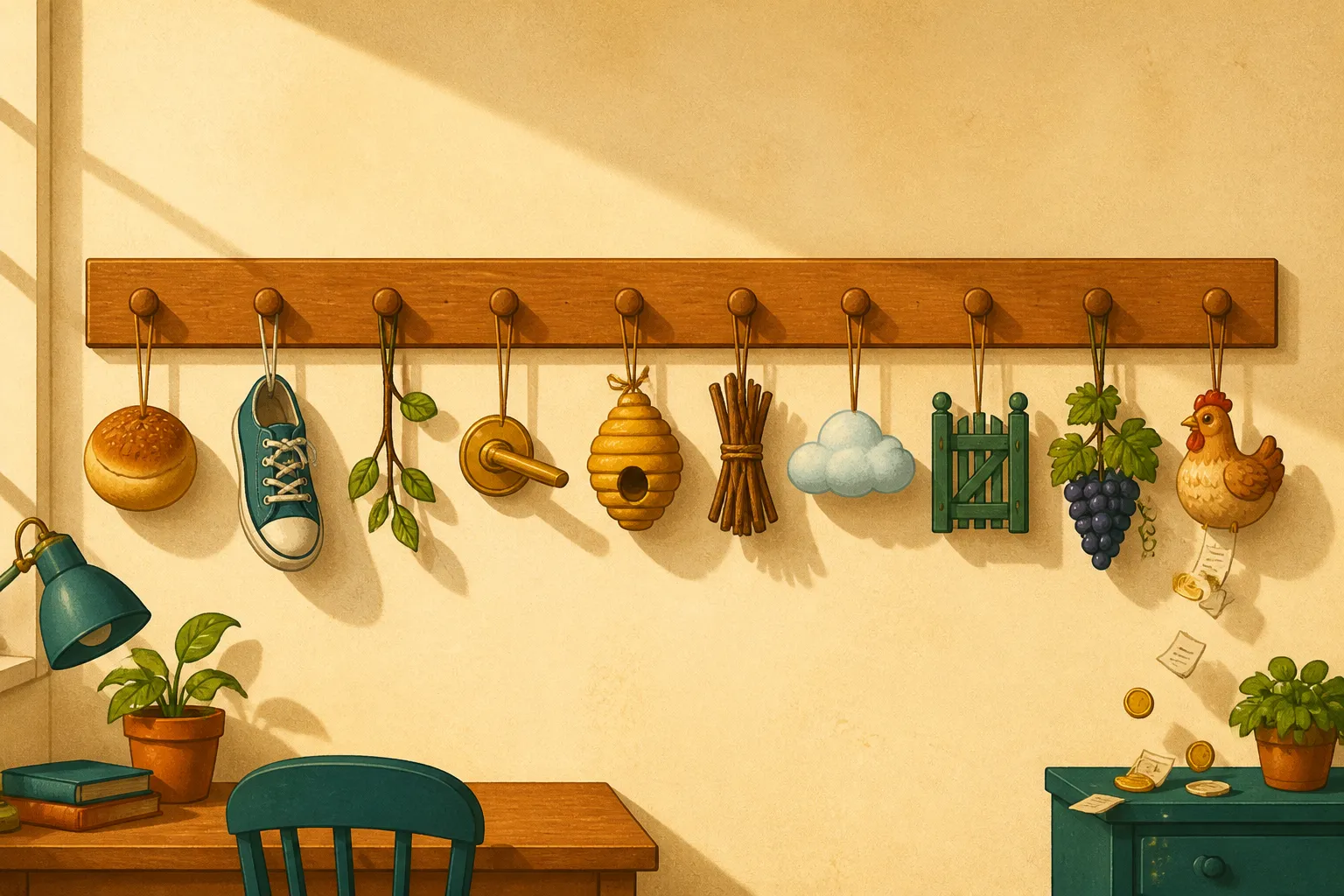
Most of us have stood in a shop with a list in our heads and watched item seven slip away. The peg system is a gentle fix. You learn ten simple images once, then hang whatever you need to remember on them. It takes an evening to set up, and it is fun to practice.
What the peg system is
The peg system is a technique for memorizing numbered lists. You first learn a fixed image for every number. Then you attach each new item to the image for its position. Later you walk through the numbers and the items come back, one per peg. The method is laid out in this overview of the peg word system.
The rhyming version is the popular one. Each number gets a sound-alike object: bun for one, shoe for two, tree for three. The rhyme gives you a cue that is hard to lose. The Memory Institute says studies have found that rhyming improves recall. The page does not name those studies or say how big the benefit is, so treat it as a plausible claim, not a proven number. The rhymes are easy to learn either way.
The ten standard pegs
Here is one common set, as listed by The Memory Institute. Start with these five.
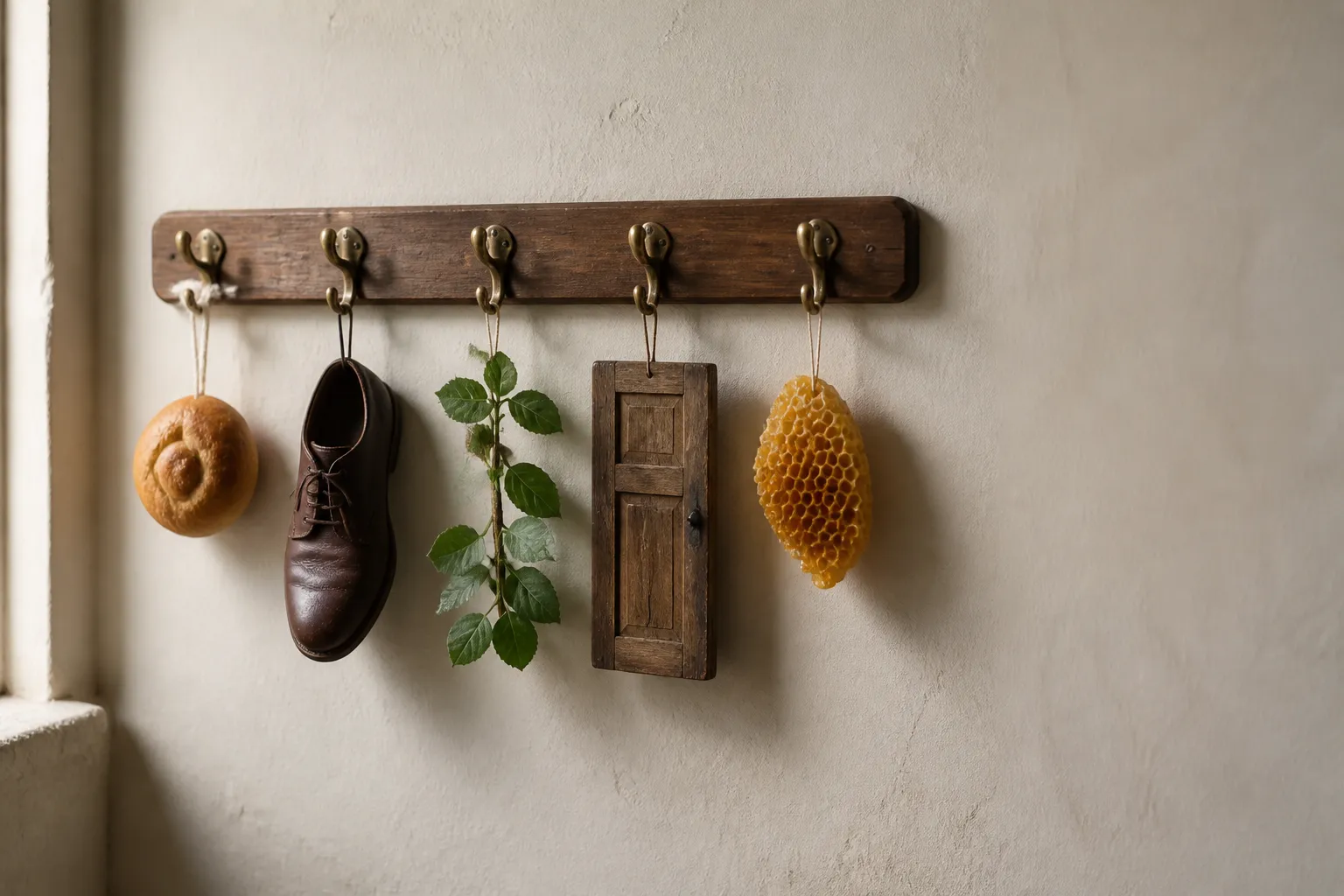
- Bun
- Shoe
- Tree
- Door
- Hive
Then add the next five. They rhyme with six through ten.
- Sticks
- Heaven
- Gate
- Vine
- Hen
To learn them, say the number, picture the peg word clearly, and repeat the pairing over several days. That is the advice from The Memory Institute. Then drill them in order and at random. The random part matters. If you can only find the eighth peg by reciting the first seven, you have built a slow staircase instead of a hook.
Building and recalling a list
Now for the fun part. Attach your first item to the bun, the second to the shoe, the third to the tree, and so on. Make each scene vivid and a little ridiculous. A milk carton sitting politely on a bun is forgettable. A milk carton exploding over a bun is not. The sources say the less likely a scene is in real life, the better it tends to stick. Once the list is set, cover it and pull each item back out by number, as the peg word guide describes.
The real payoff is direct access. You can ask yourself for item three without replaying items one and two. The Memory Institute makes the same point about the eighth item, which you can recall directly instead of counting forward from the start. If a peg word slips, a little story through the pegs you do know can rescue it. Their example runs through floor clean and cream.
Pegs are also reusable. Start a new list and you swap in new temporary images. If old and new lists collide, keep separate peg sets or add extra context. The scenes are meant to fade once you no longer need them, so there is no need to hold on to the exploding milk.
Try it yourself
Here is a short list to hang on the first five pegs. Read it once, build a wild scene for each, then cover the list and test yourself.
Memorize in order: eggs, batteries, lemon, stamps, rice. Without looking, what is on peg four? What is on peg two?
Answer: Peg four is stamps, so picture a door plastered with stamps. Peg two is batteries, so picture a shoe that lights up when you put it on. If you got both without counting, the hooks are working.
Where the sources disagree, and when to pick another tool
Be ready for one wrinkle. Sources do not agree on every peg word. Two is "shoe" in most lists. Six is "sticks" in one source and "chicks" in another. Wikipedia's rhyming example also uses sun for one, weight for eight, and brine for nine. The Wikipedia article is flagged as needing more citations. The fix is simple. Pick one set, write it down, and stay with it. A consistent set beats a "correct" one.
The other gaps are worth knowing too. The sources do not measure the size of the recall improvement. They do not say how long the pegs take to learn or how long the memories last. The Memory Institute describes its system as effective up to twenty items, and one list reaches twenty with less standard pegs like leaven and shelve. For longer lists, one source points to the larger Major System image list but does not explain how to build it.
History is foggy as well. One source credits Henry Herdson with a mid-1600s peg system built on shapes that resemble numbers, a candle for one and a duck for two. It also admits the origin is not clear.
Finally, pick the tool for the job. The peg system suits numbered items and out-of-order recall. The link system suits lists you will recite in sequence, though it makes a specific position harder to find. The memory palace uses familiar places as cues and suits longer ordered sequences, per the peg word guide. Ten hooks cover a lot of everyday lists, and you can start tonight.